
Polmuz Drums – Polish maker of drum kits, snares and cymbals, built custom.
I have been working with drums since 2006, when we started DrumStore, our drum shop in Gdynia, Poland. Over the years countless kits from all kinds of brands have passed through our workshop, and each one taught us something. Polmuz, our drum brand, is everything we took away from that.
Today Polmuz is four drum kit models: from Model 4 for beginners, through Model 3, to Models 2 and 1, which we build to order in our own workshop. Every custom kit starts with a conversation and ends with an instrument that is one of a kind.
The shell carries a lifetime warranty. Many professional drummers play Polmuz, and the best recommendation of all is that the Warsaw Philharmonic and the Polish Armed Forces have ordered instruments from us too.
Tomasz Stukan
4.9★★★★★816 reviews on GoogleSee reviews →
Look inside the drum before you buy it.
Whether a drum sings is decided by things you cannot see in a shop photo: the bearing edge, the drilling, the screws inside. We show them, because we have something to show.
Four things a photo will not show you
We don’t say “the finest materials”. We say which, how much and why.
Thin maple plywood
Back in 2019 I ordered a pile of different plywoods, thicker and thinner, and listened to what sounded better. This one won: six plies, 4.8 mm.
Knock on the bare shell and you hear its note — long and clean. If a piece of wood goes silent when you hit it, the drum built from it will be dead too.
A side effect: a lighter kit. You notice it every time you carry it to a gig.
The edge the head rests on
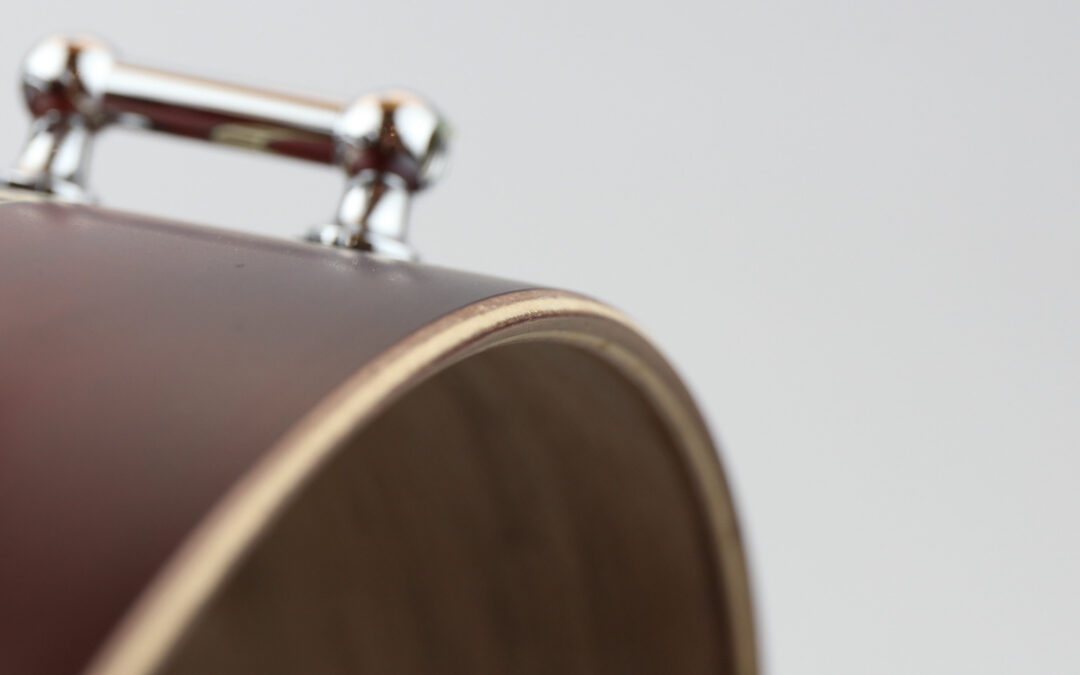
A drumhead is rounded where it meets the hoop and flat further in. Our edge lands on the flat part — which is why the drum tunes low and stays in tune.
We built about ten shells with different edges and listened. The winner was the same edge we knew from vintage drums.
We cut it, polish it smooth and wax it. When people come to the workshop, I make them touch it.
Drilling drawn like ship sections
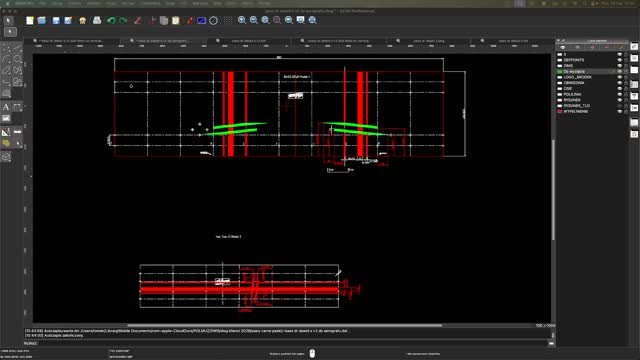
I trained as an engineer and used to design ships. I draw the hole layout in QCAD as a flat development of the shell, exactly the way you draw the flat sections of a hull.
A shell is never a perfect circle — it is usually a slight ellipse. Lugs from different makers differ too. Precise drilling evens all that out.
An ordinary drill bit costs five zloty. We work with top-grade bits, Smart Step type — and you can see that difference in the hole.
The inside nobody ever looks at
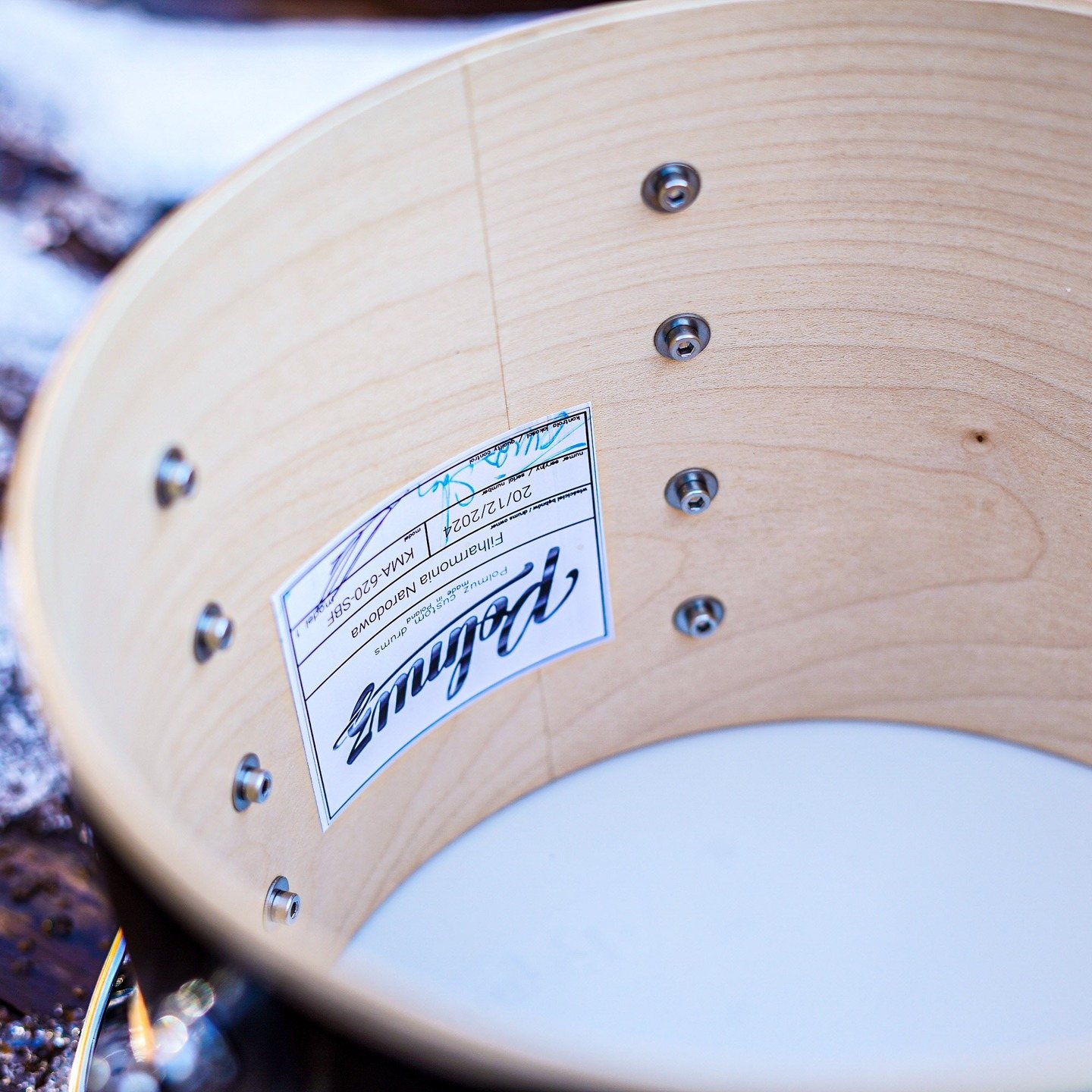
The inside of the shell is waxed and oiled twice. Nobody paints a wooden house with polyurethane — you oil it and wax it, so the wood keeps breathing and moisture stays out.
The mounting screws are Polish-made stainless acid-resistant steel, the kind used in shipbuilding. Not the black ones that start rusting from a single scratch.
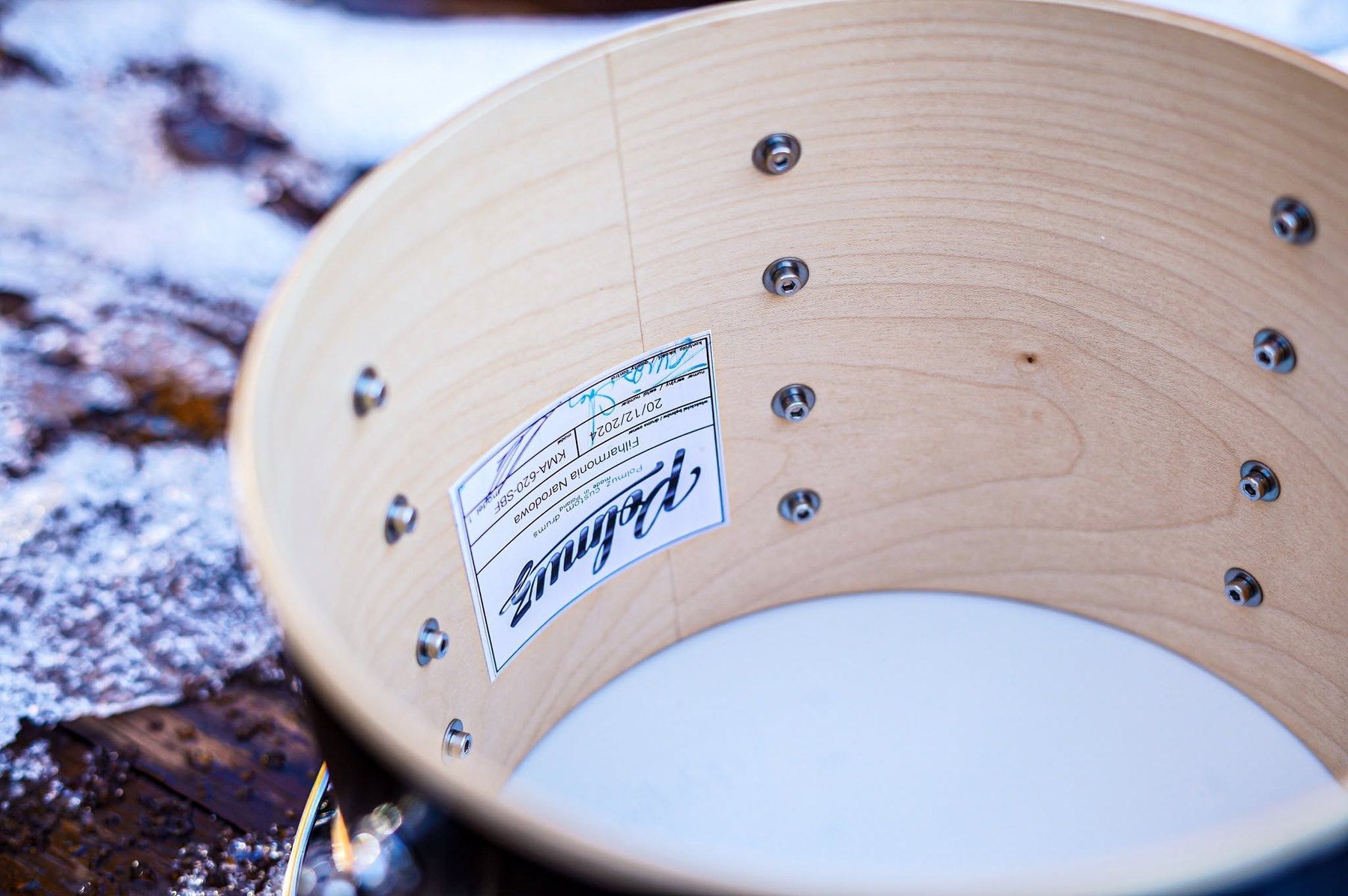
In the photo you can see the label with the owner’s name. That is where the lifetime warranty starts.
A throw-off that really lets the wires go
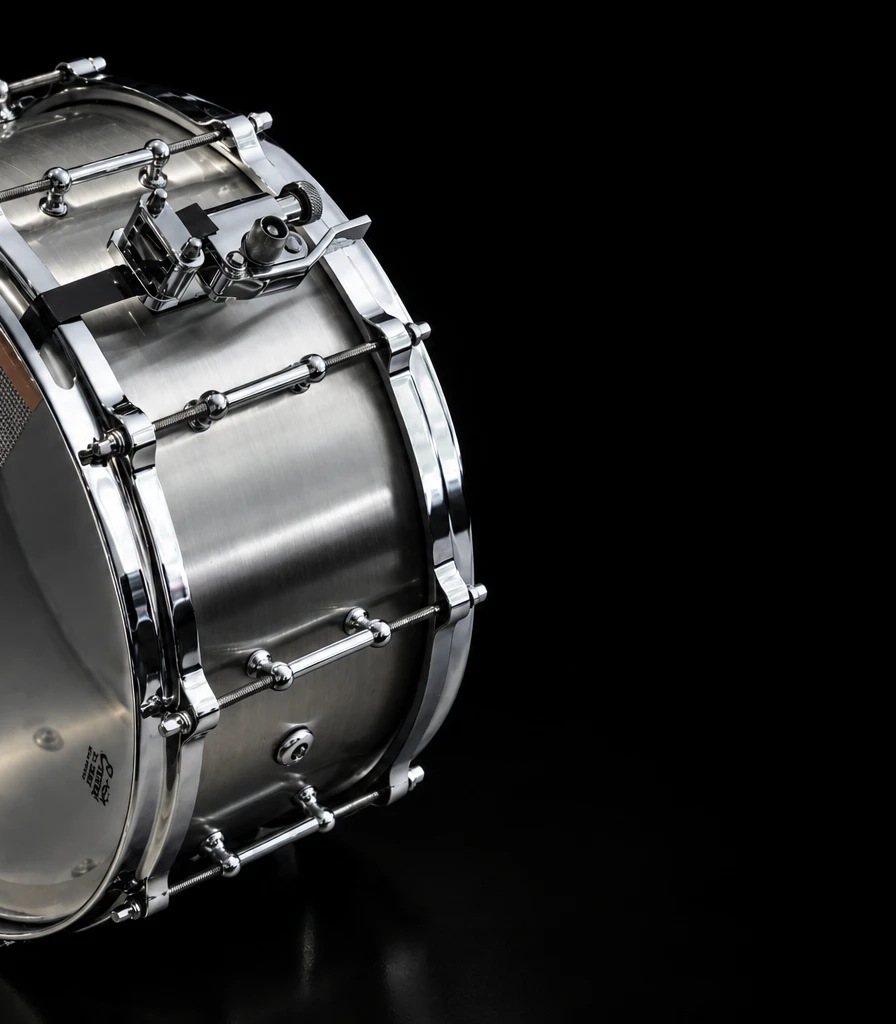
A typical throw-off pulls the wires 7 mm off the bottom head. Ours pulls them 14.
What it means when you play
The wires sit against the bottom head, and that is what gives a snare its crack. When you want the snare to sound like a tom or a bongo, you drop them with the throw-off.
At 7 mm the wires stop too close. They still vibrate with the head and you hear buzzing underneath — you know it from cheaper snares: the throw-off is down and the drum still isn’t clean. At 14 mm the wires are genuinely far away and go completely quiet.
You hear it best on a rim shot. With the snares off, a hard hit on the hoop should not move them at all — but when the throw-off only drops a little, the wires bounce off the resonant head and answer every hit like that.
You also hear it in quiet passages and in the studio, where that buzz gets into every microphone on stage and cannot be taken out afterwards.
A drum built from a rocket
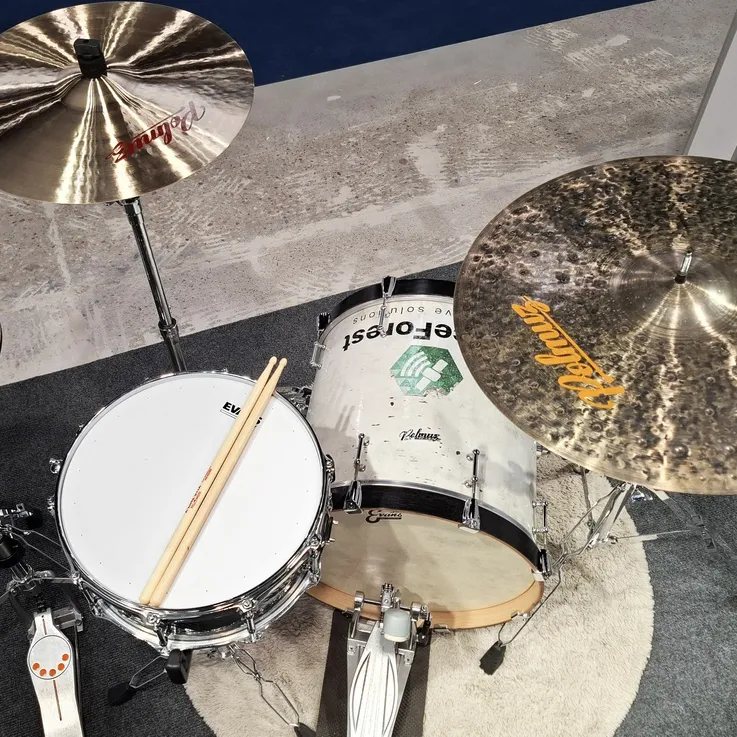
A few kilometres from the workshop, the Gdynia company SpaceForest builds the suborbital rocket Perun. After the flight, its parts come to us.
In 2024 we were given the SF-1000 engine chamber and sections of the prototype airframe that were no longer fit to fly after launch. We turned the engine chamber into a snare drum and the airframe into a bass drum — the first drums in Poland built from rocket structure.
Nobody had ever worked that material as an instrument maker: we settled the edge angle, the wall thickness and the way hardware is mounted by testing on composite offcuts. The instruments played at the Sopot Molo Jazz Festival, and in April 2026 they were shown at the 3rd Drum Marathon at the Academy of Music in Gdańsk.

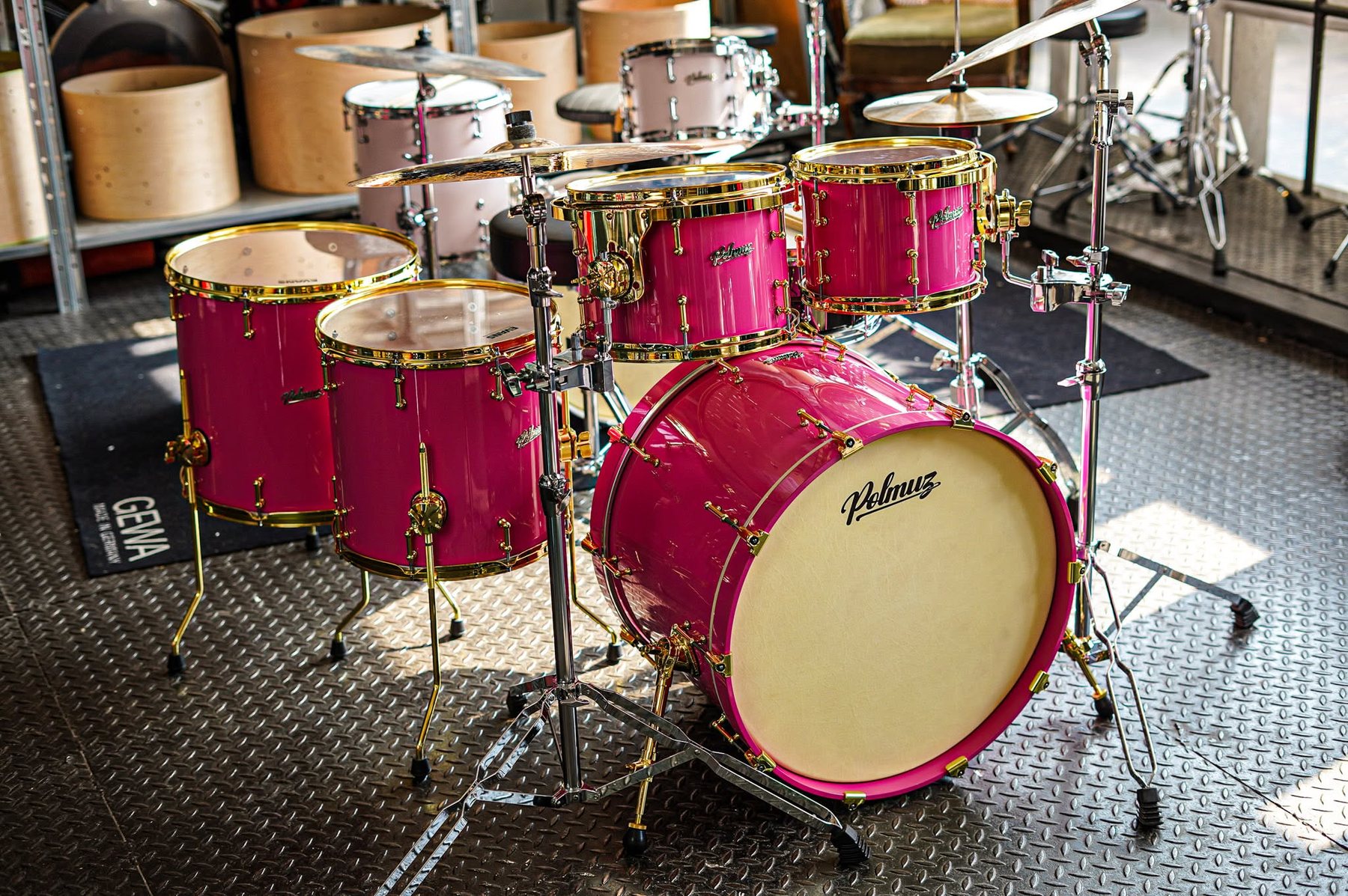
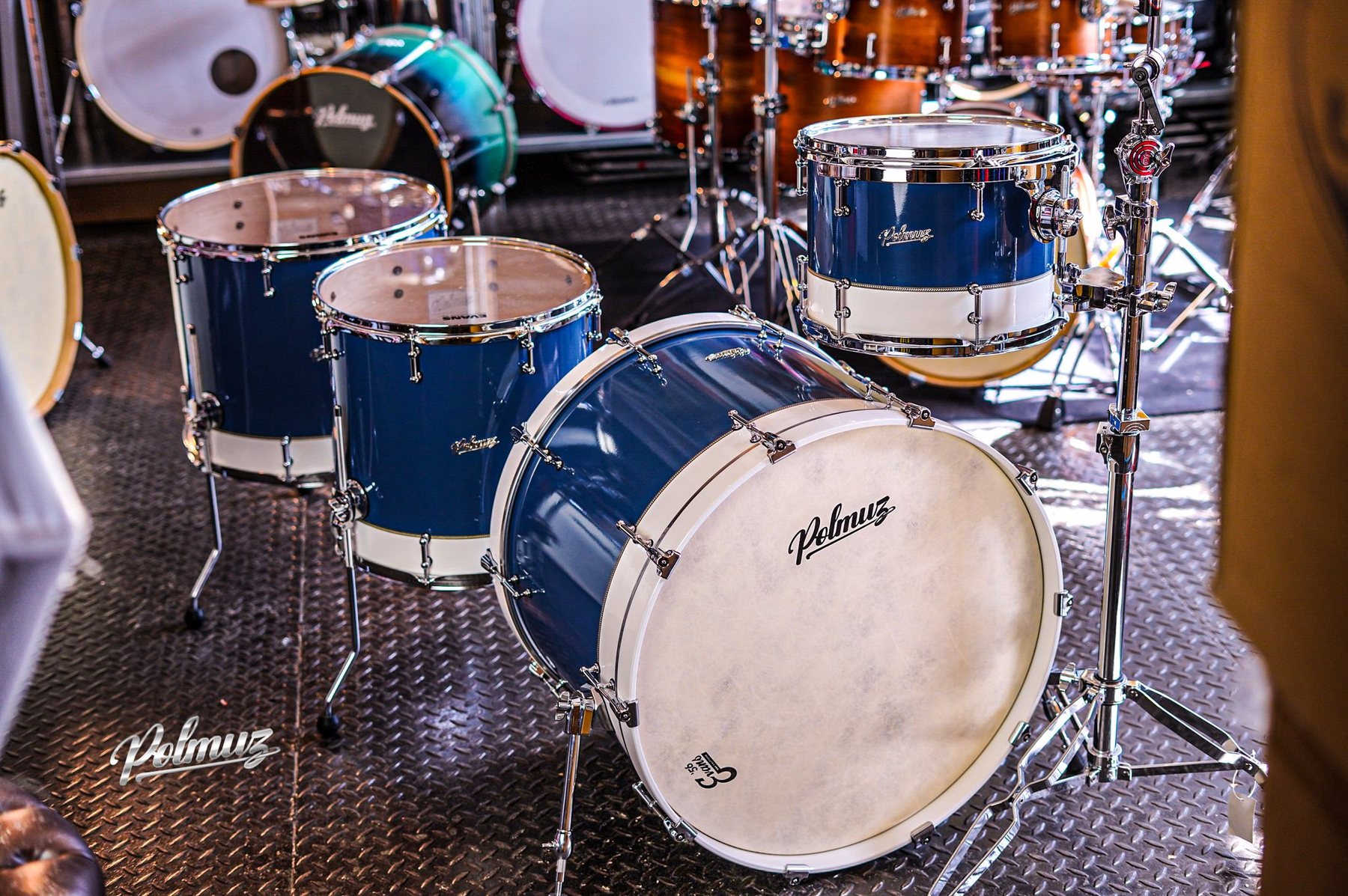
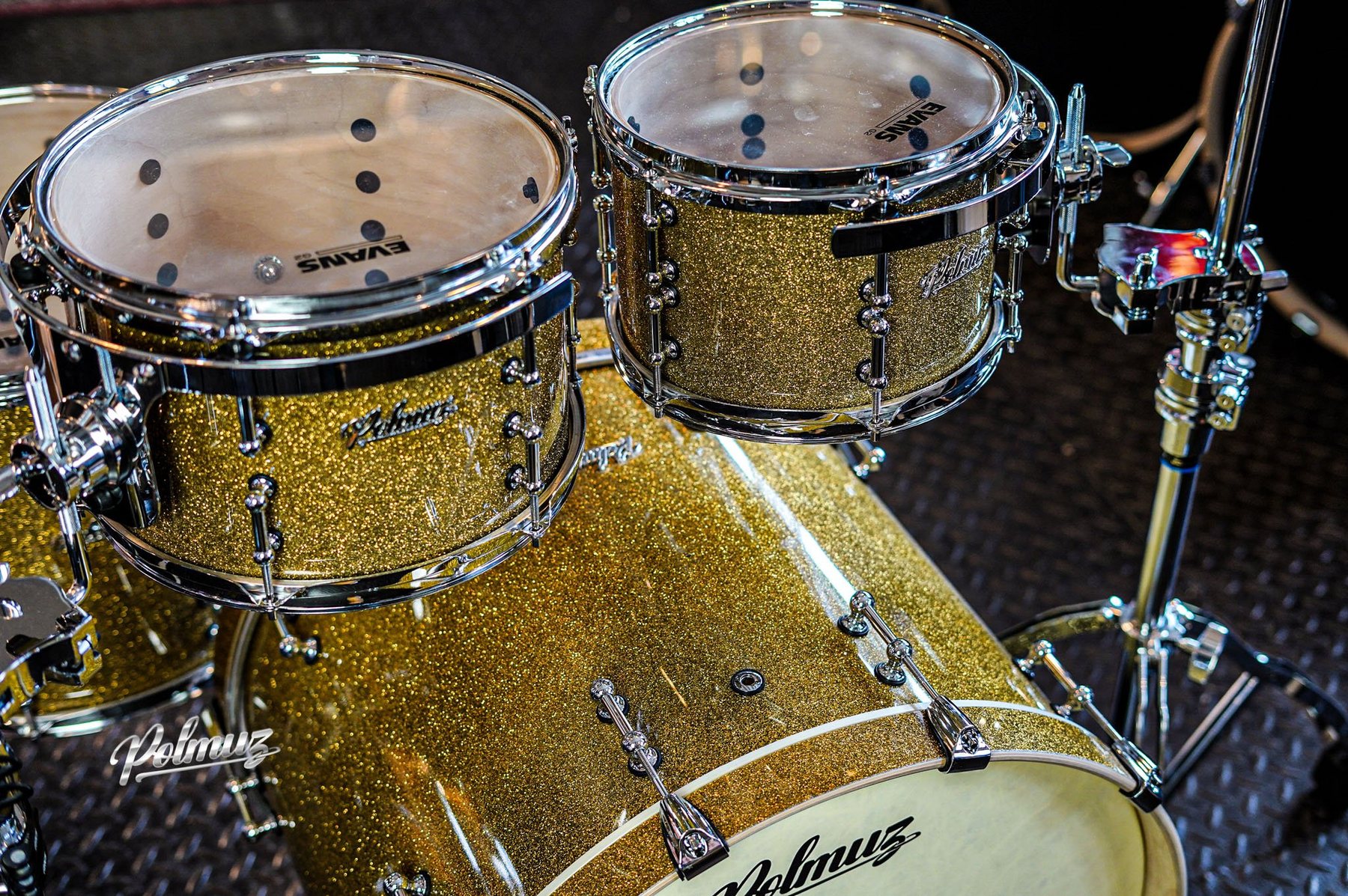
Five painting cycles
Drums are the most spectacular instrument on stage. They don’t have to sit at the back as a barely visible backdrop — they can stand next to the front man.
You are not stuck with a maker’s colour chart or with whatever happens to be on a distributor’s shelf. We match colour with a spectrometer to whatever you bring us — by measurement, not by eye.
For us a finish is not only how it looks. A thick coat of paint chokes the shell, which is why we lay most colours in oil and wax — thin, so the wood keeps working. A drum should sound as good as it looks.
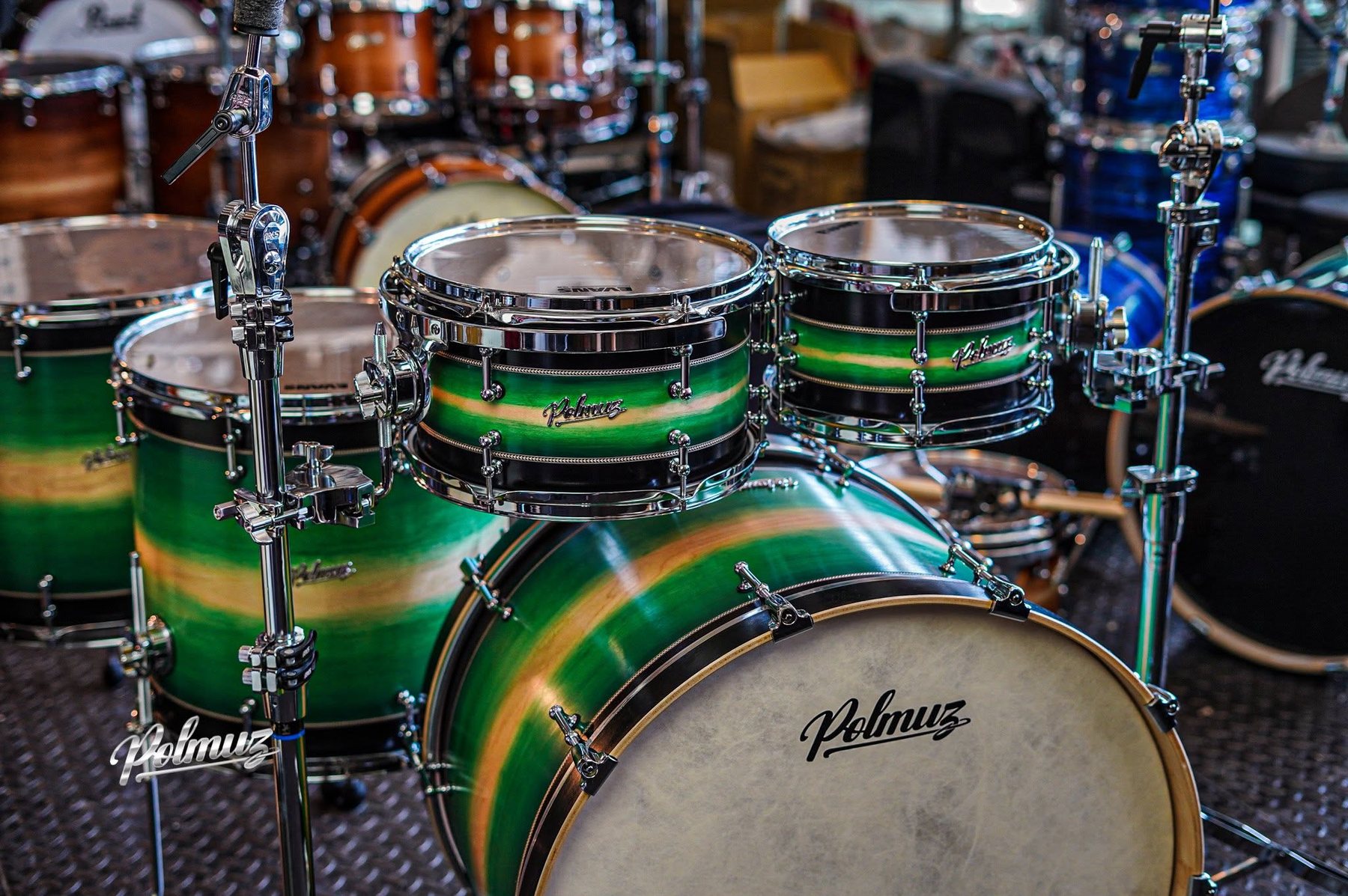
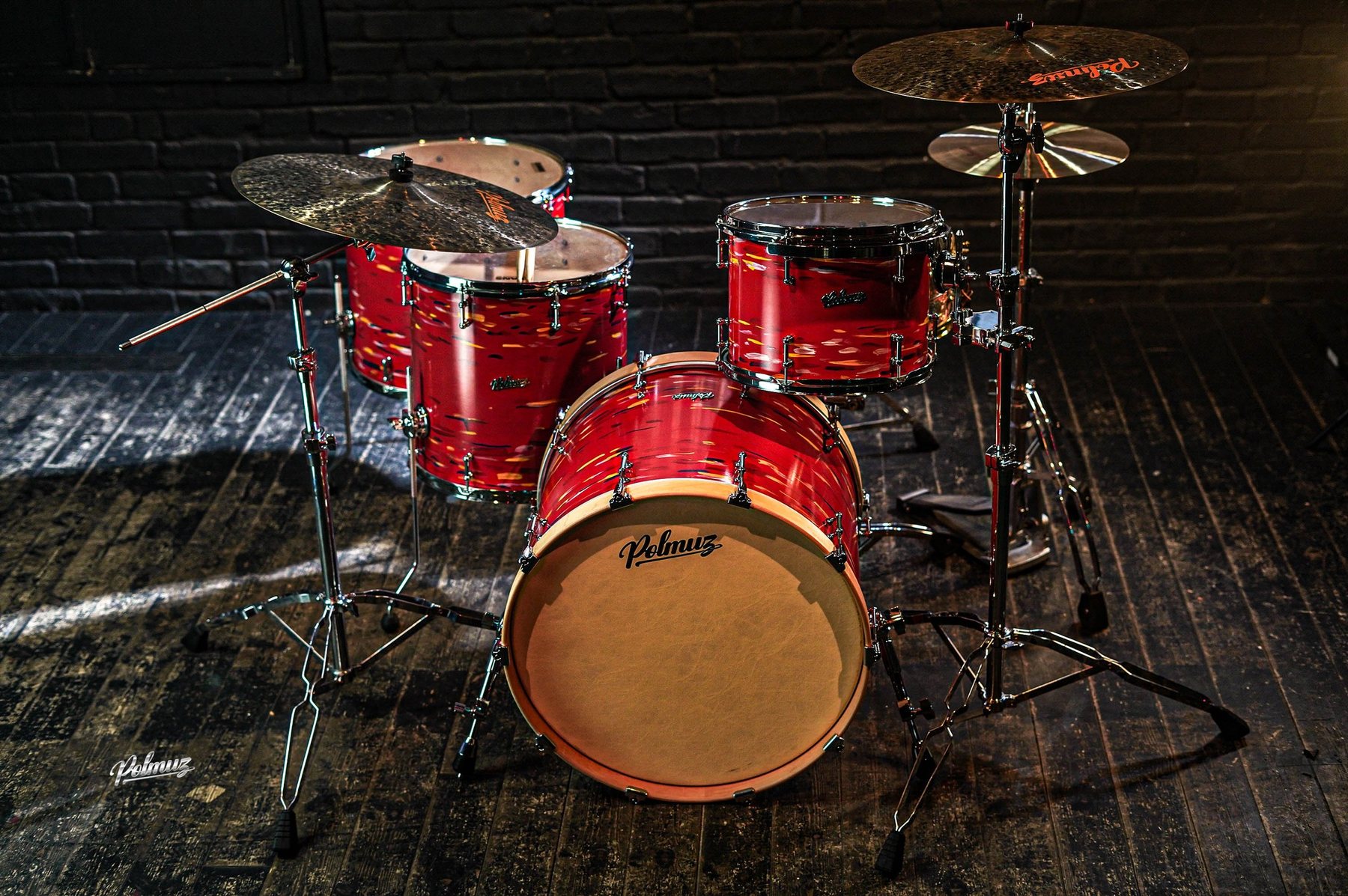
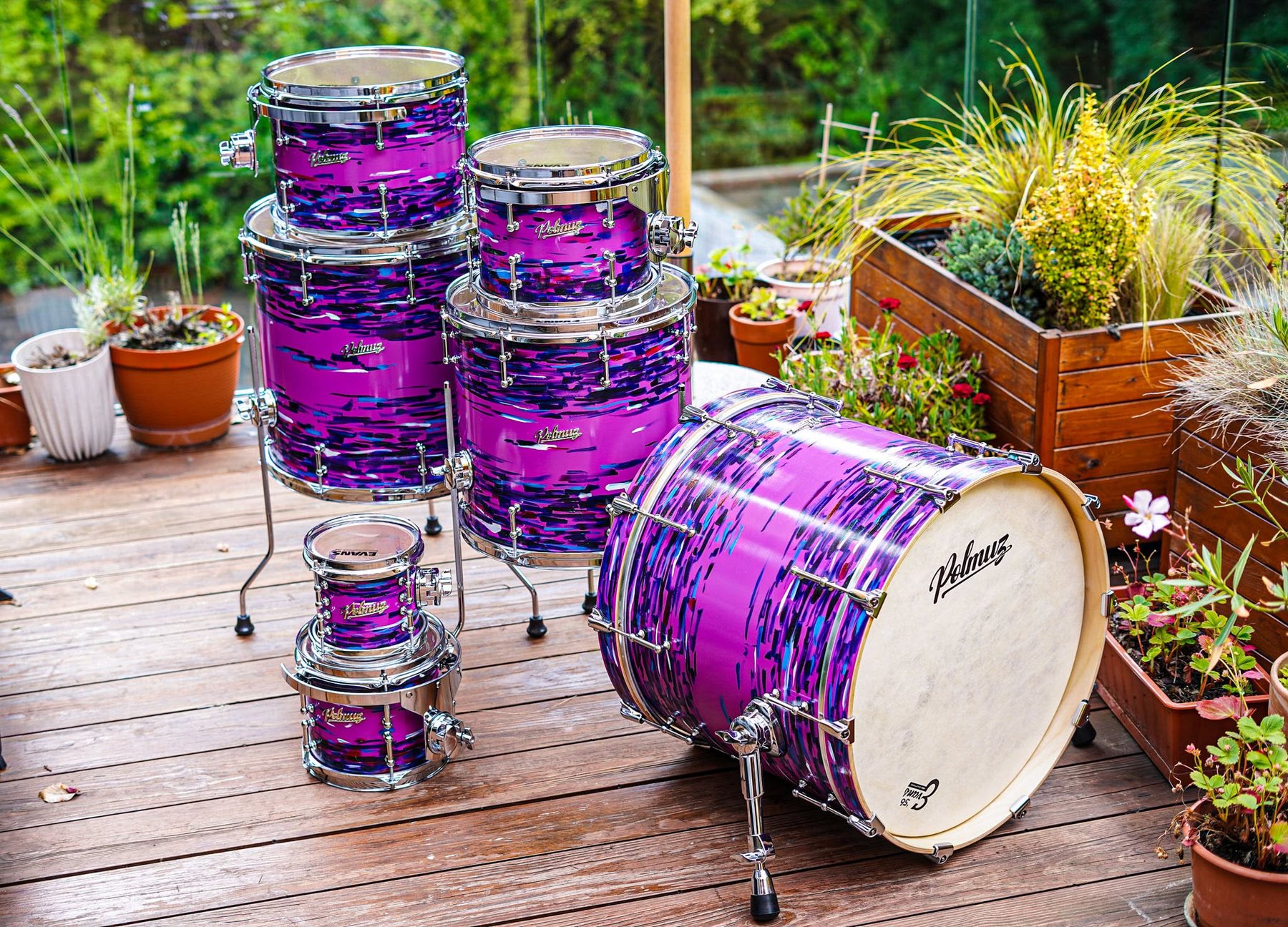
Every kit is painted by hand, with no stencil. Two drums from the same cycle never come out identical — and that is the point. Bring your own idea, or pick one of the five directions we have been developing since 2020.
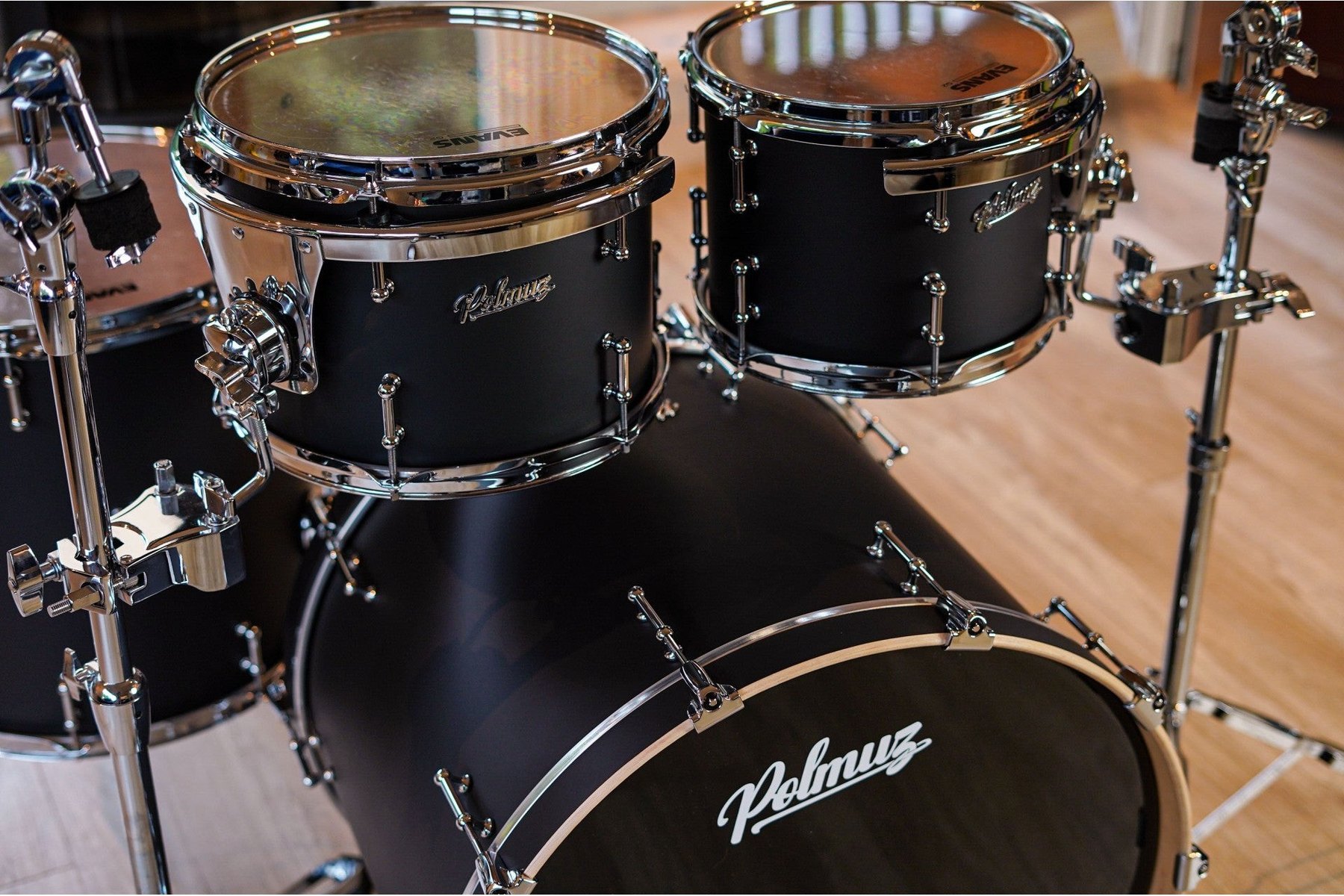
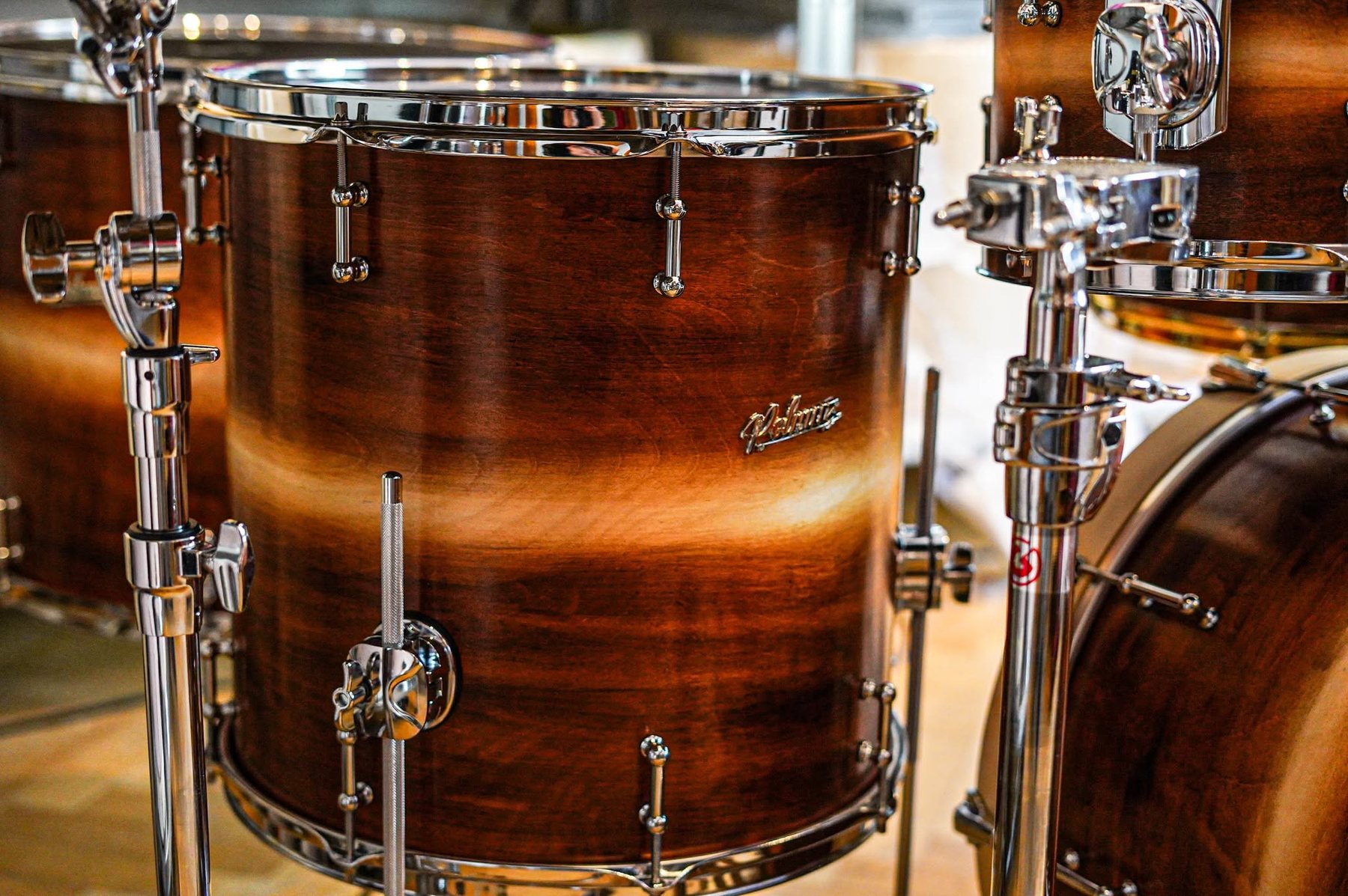
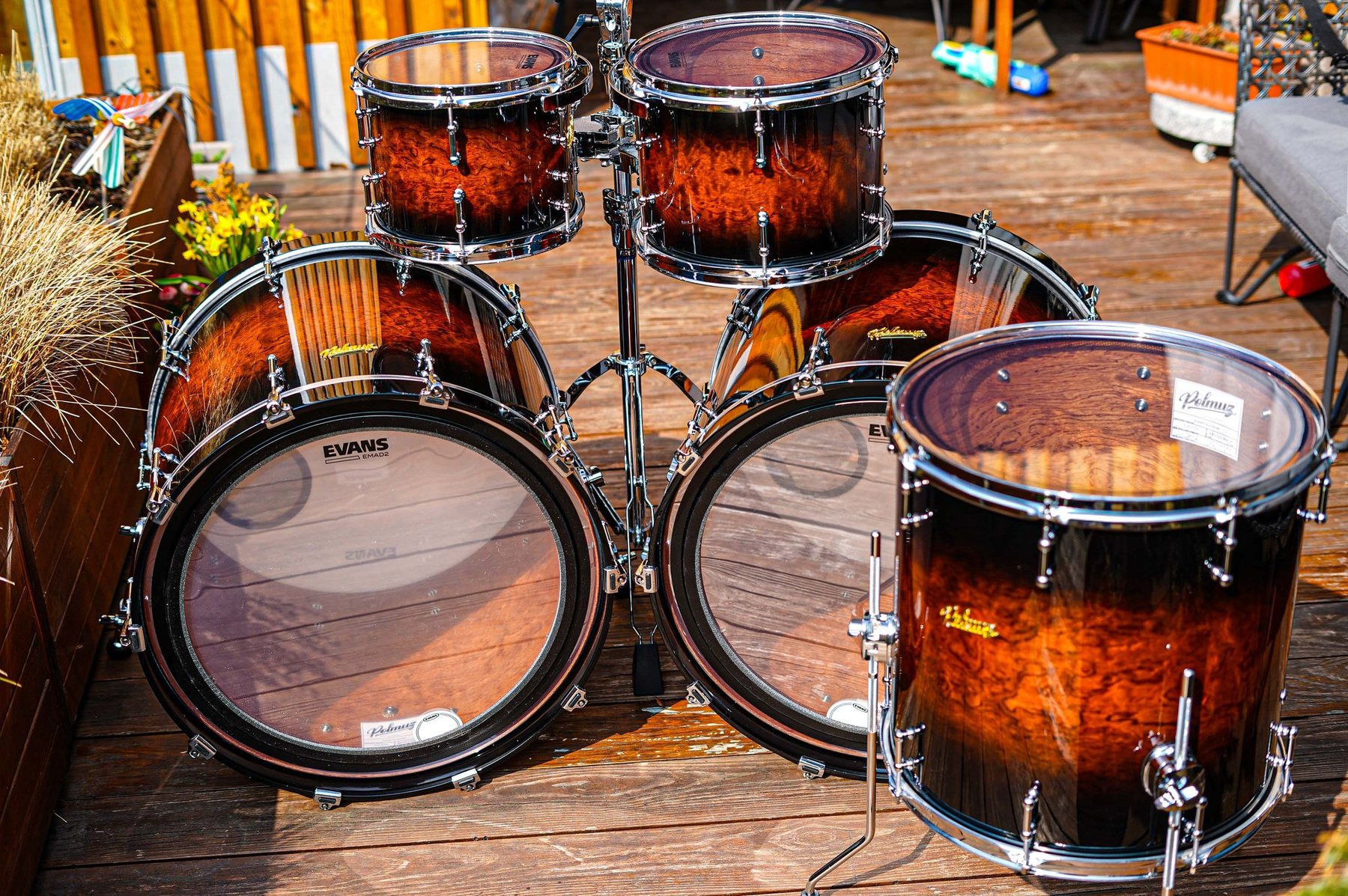
Oil and wax fade
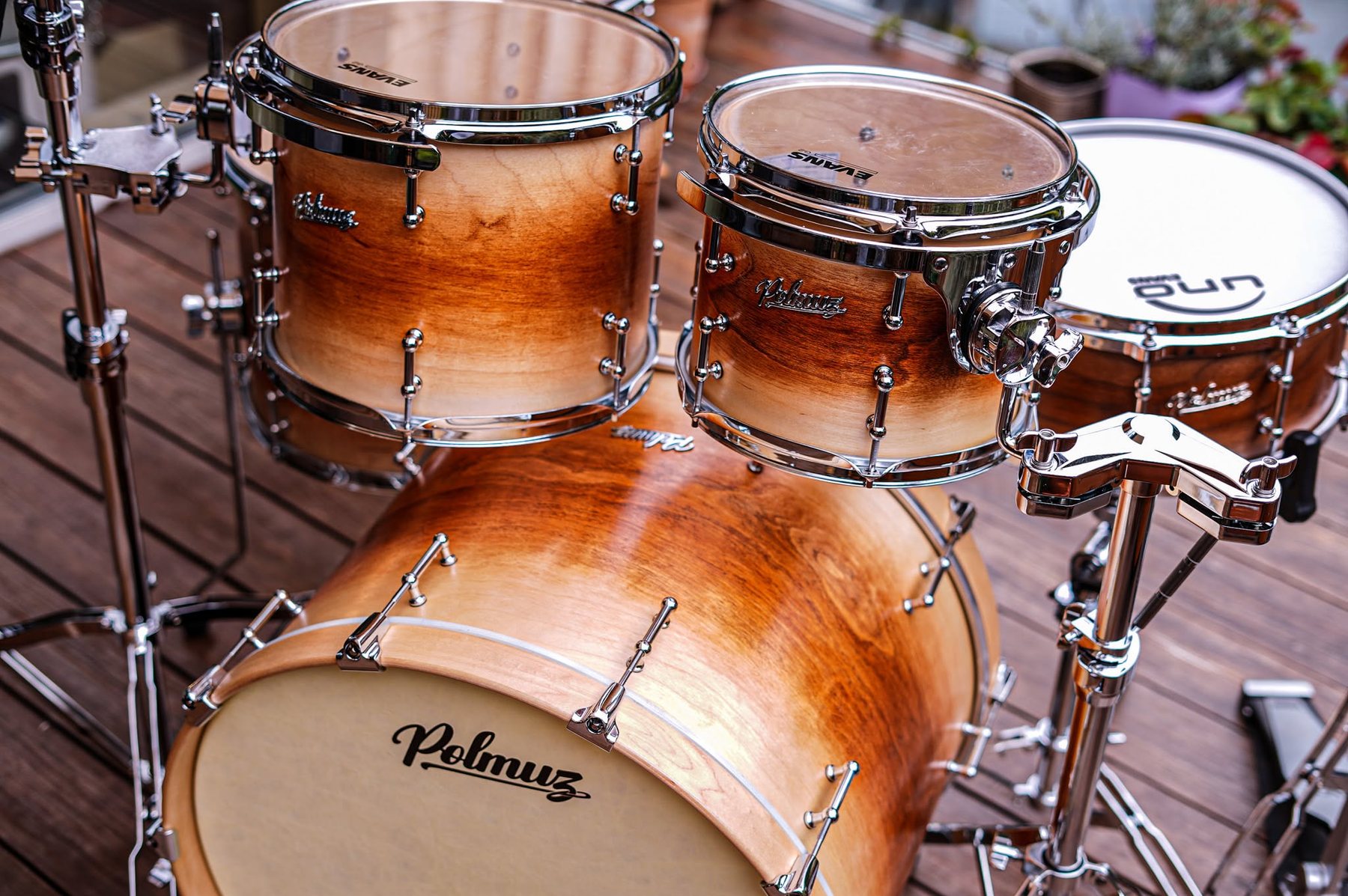
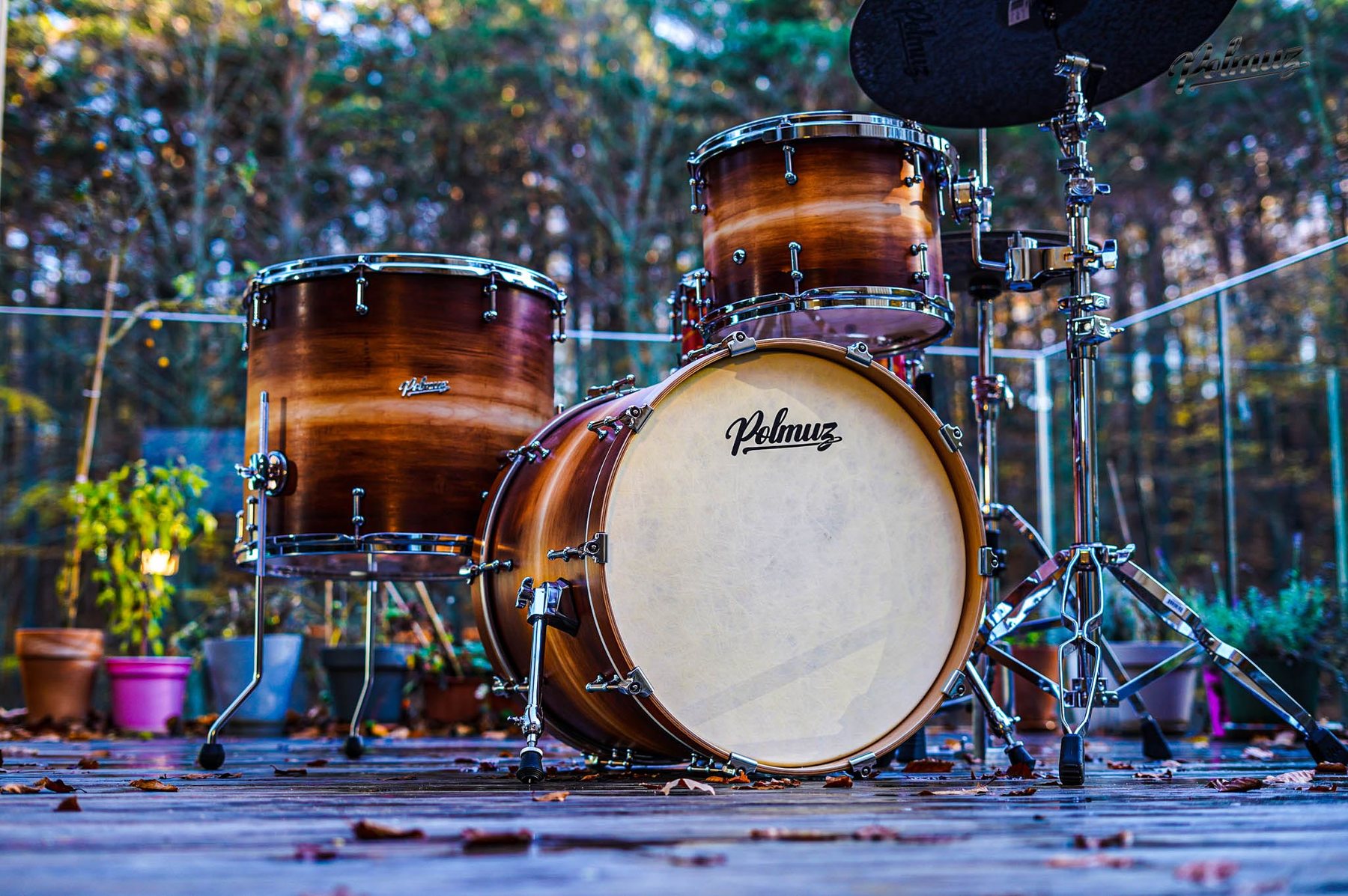
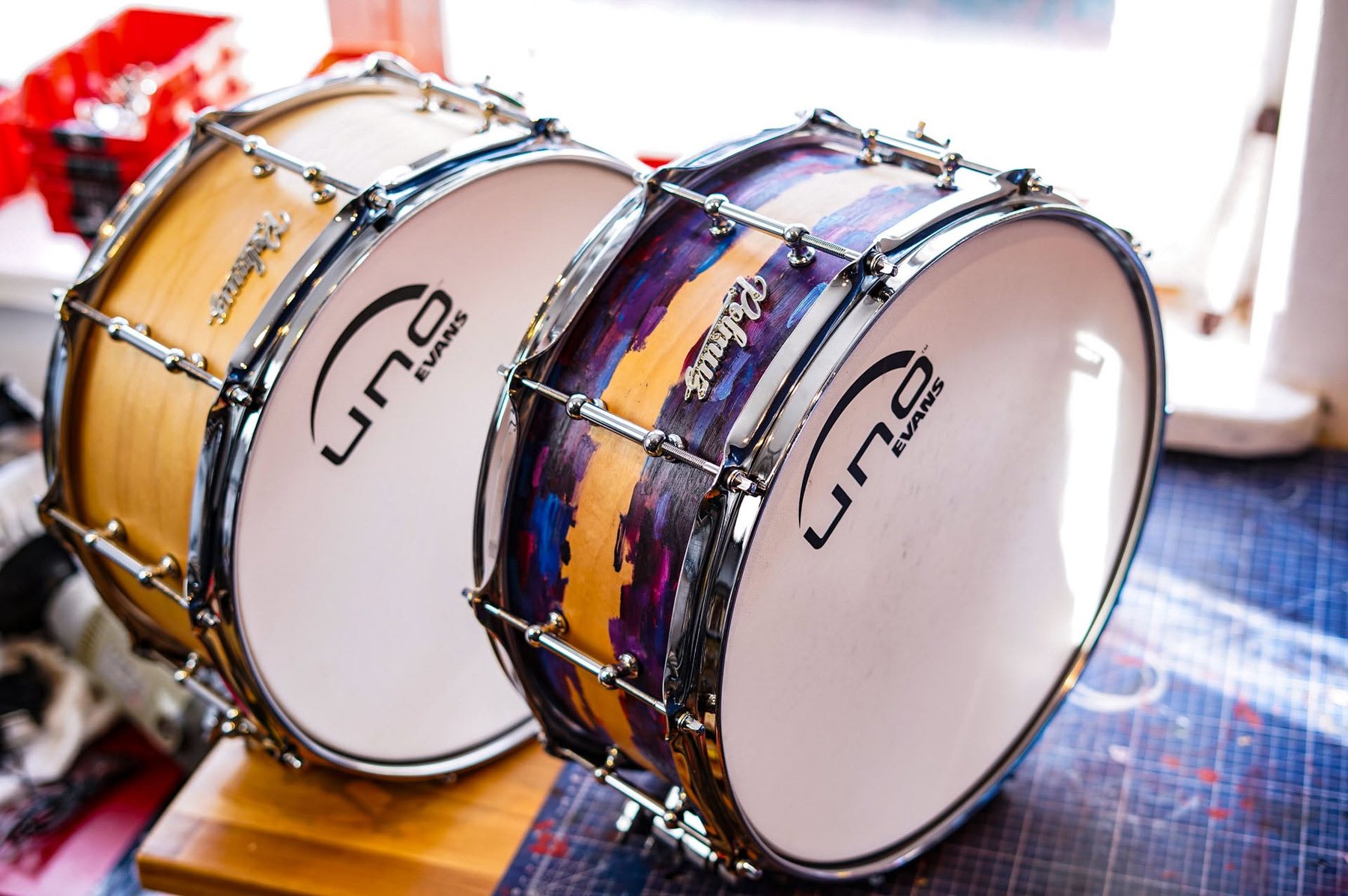
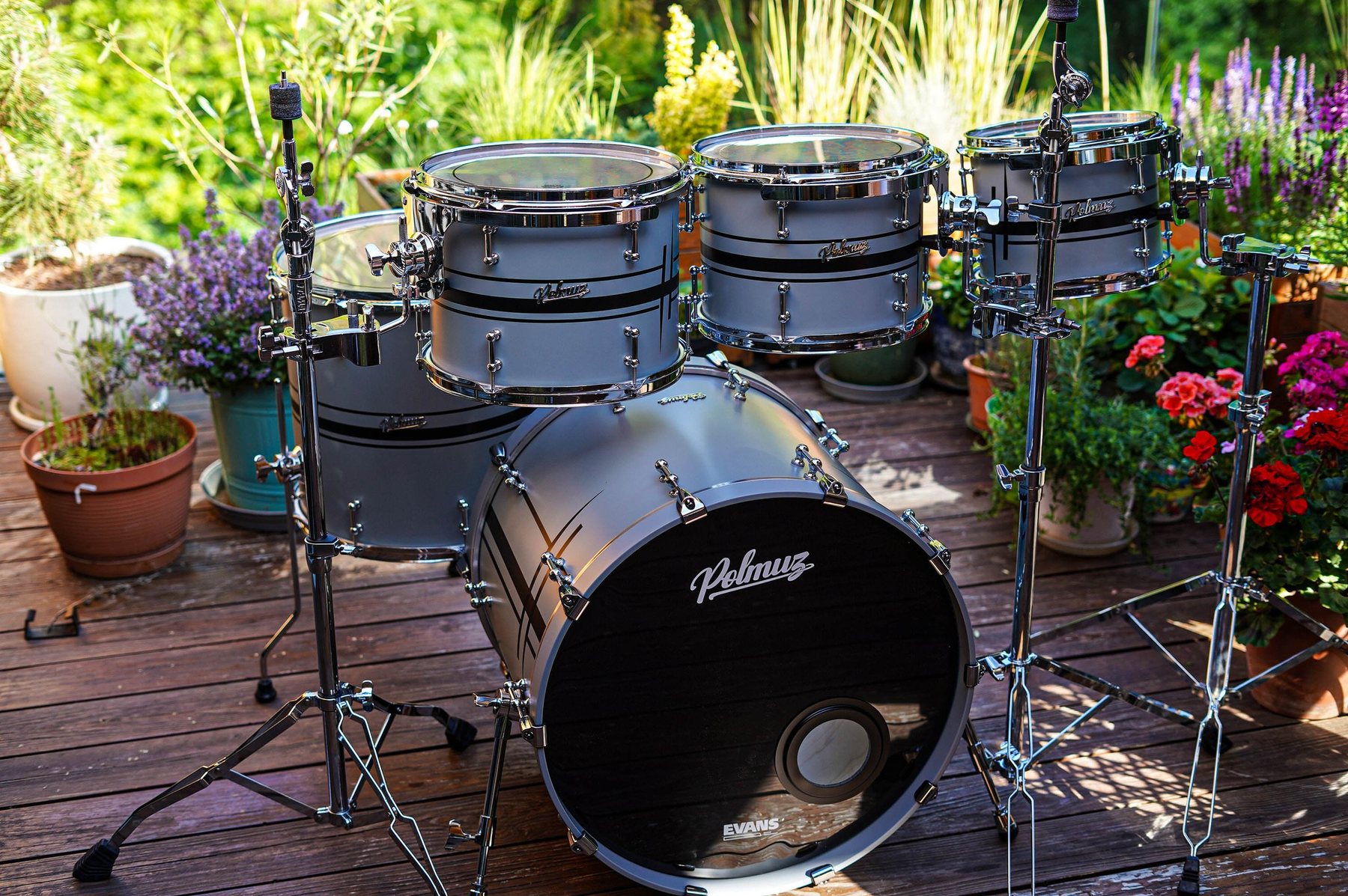
Our own shading method, applied by hand in oil and wax only — no spray, no lacquer. The colour runs out into bare wood, and the thin coat of wax does not choke the shell. The same technique also gives solid colours — flat black wax is the one people order most.
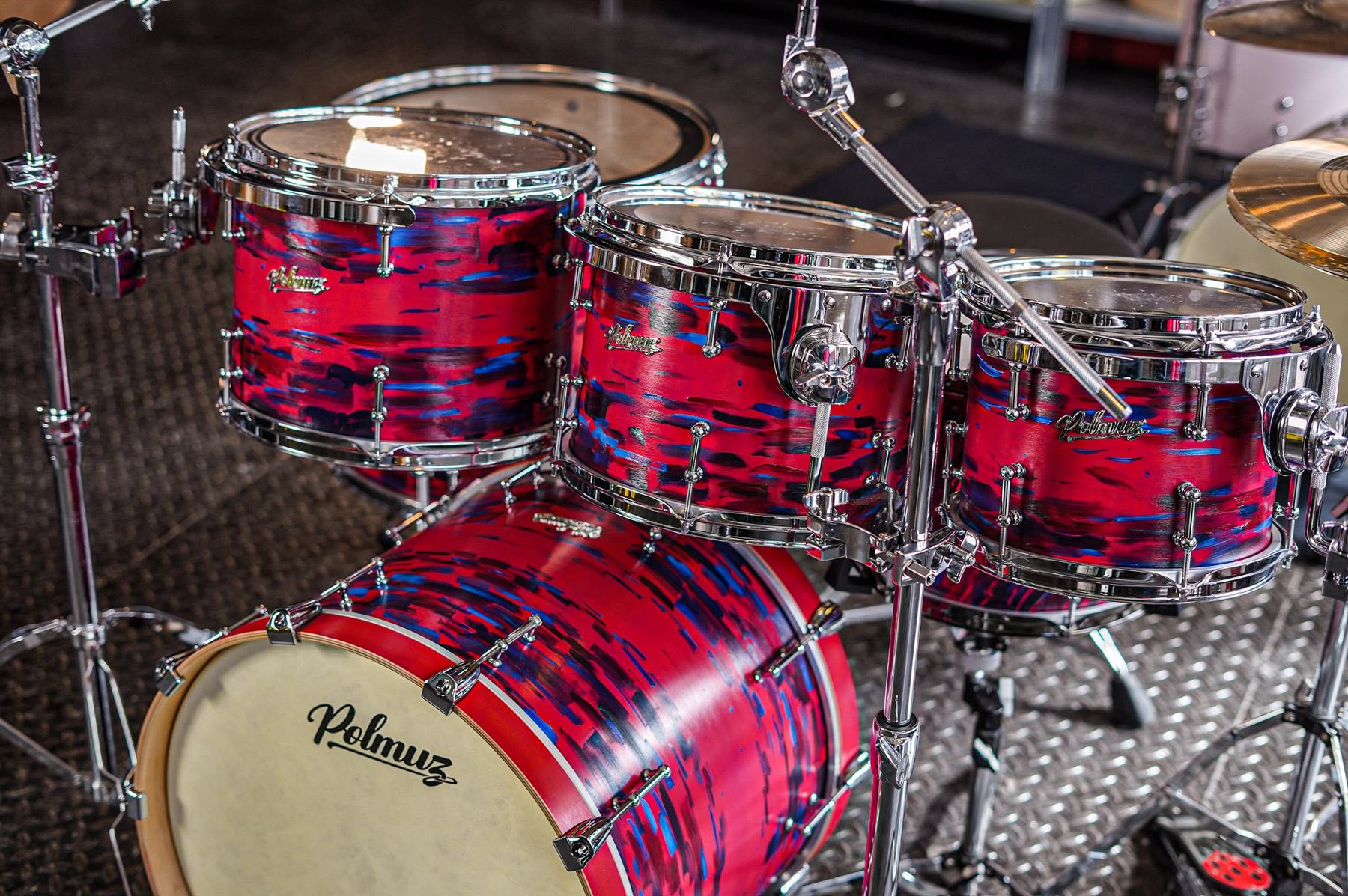
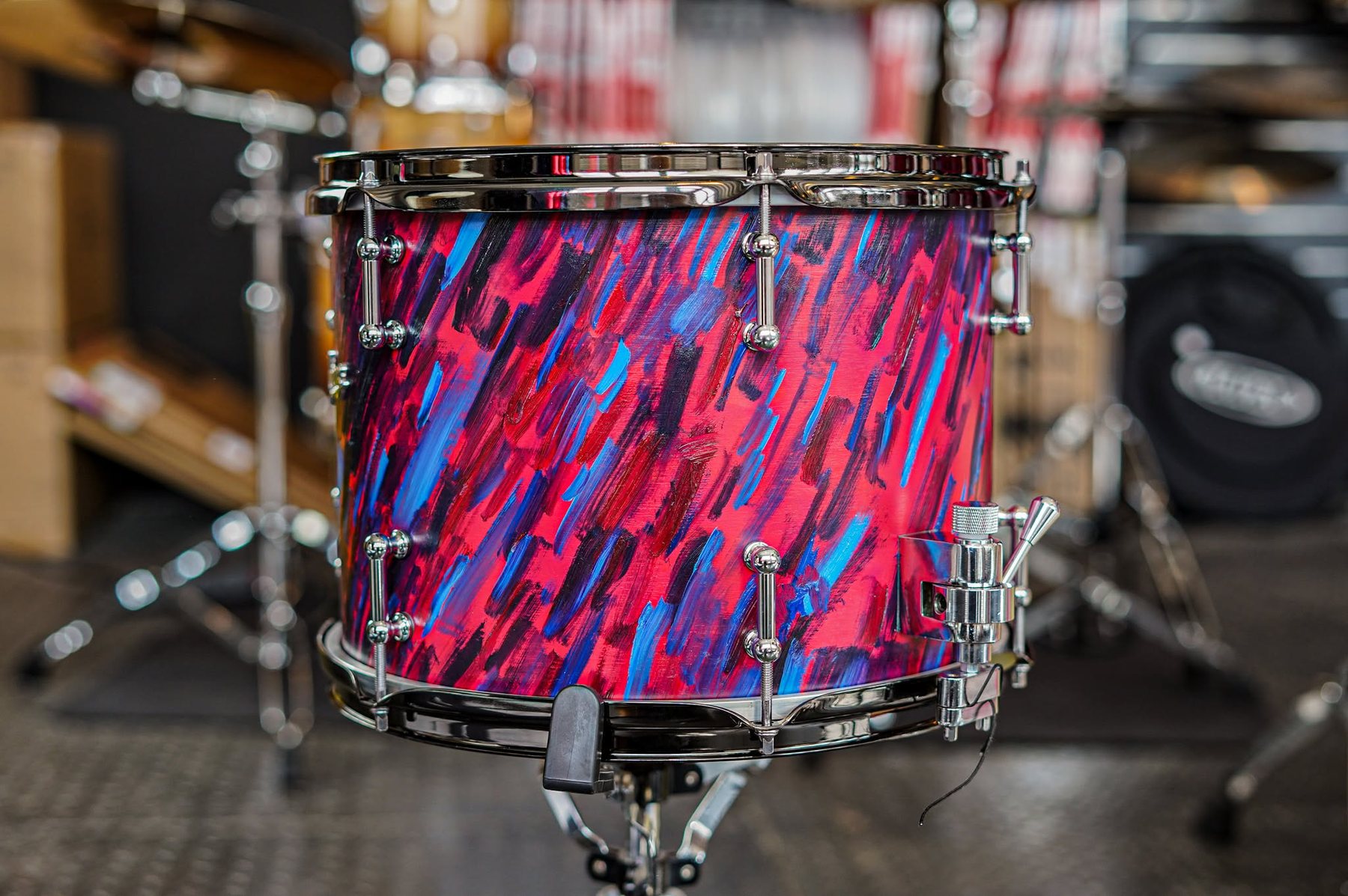
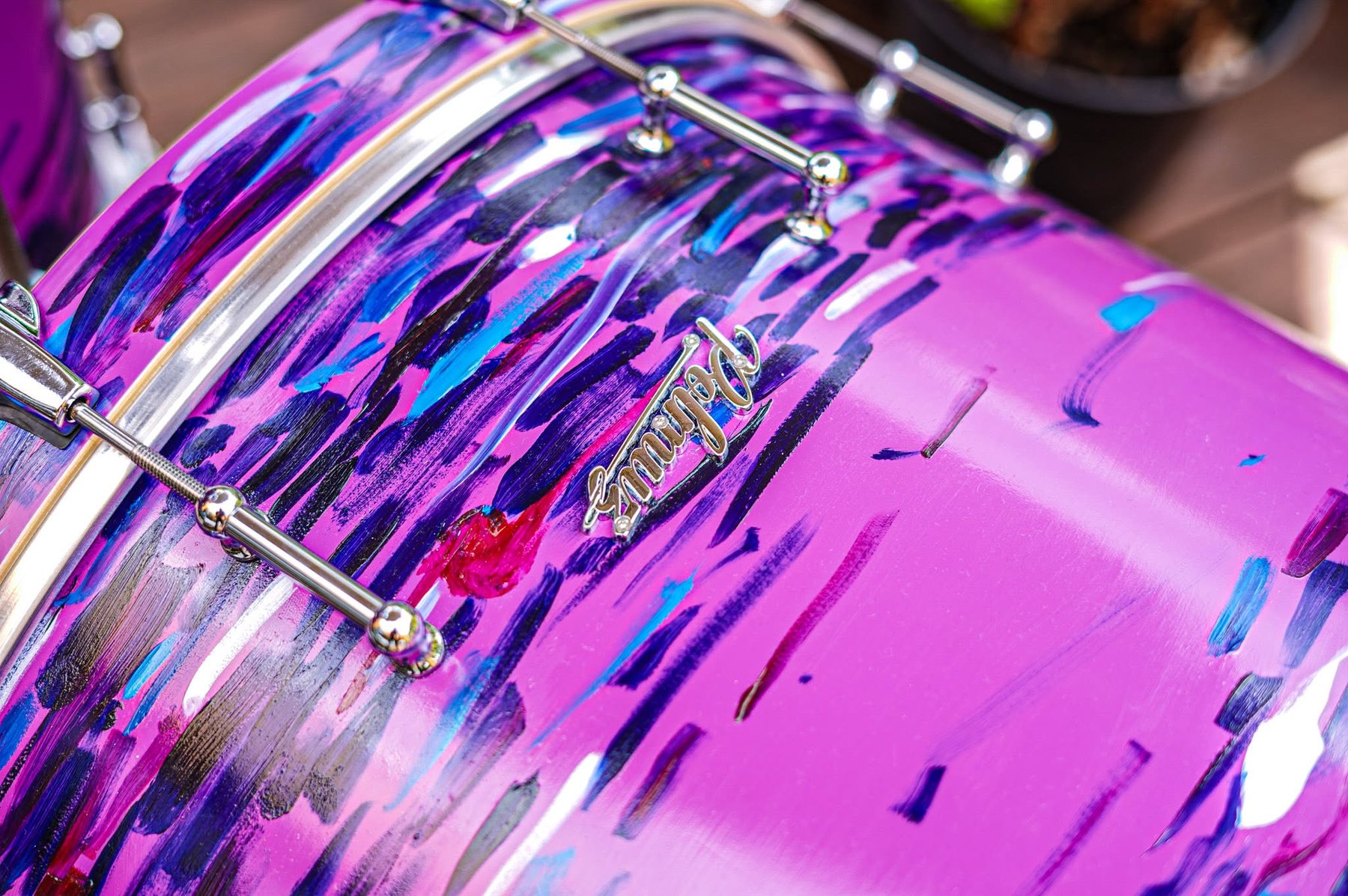
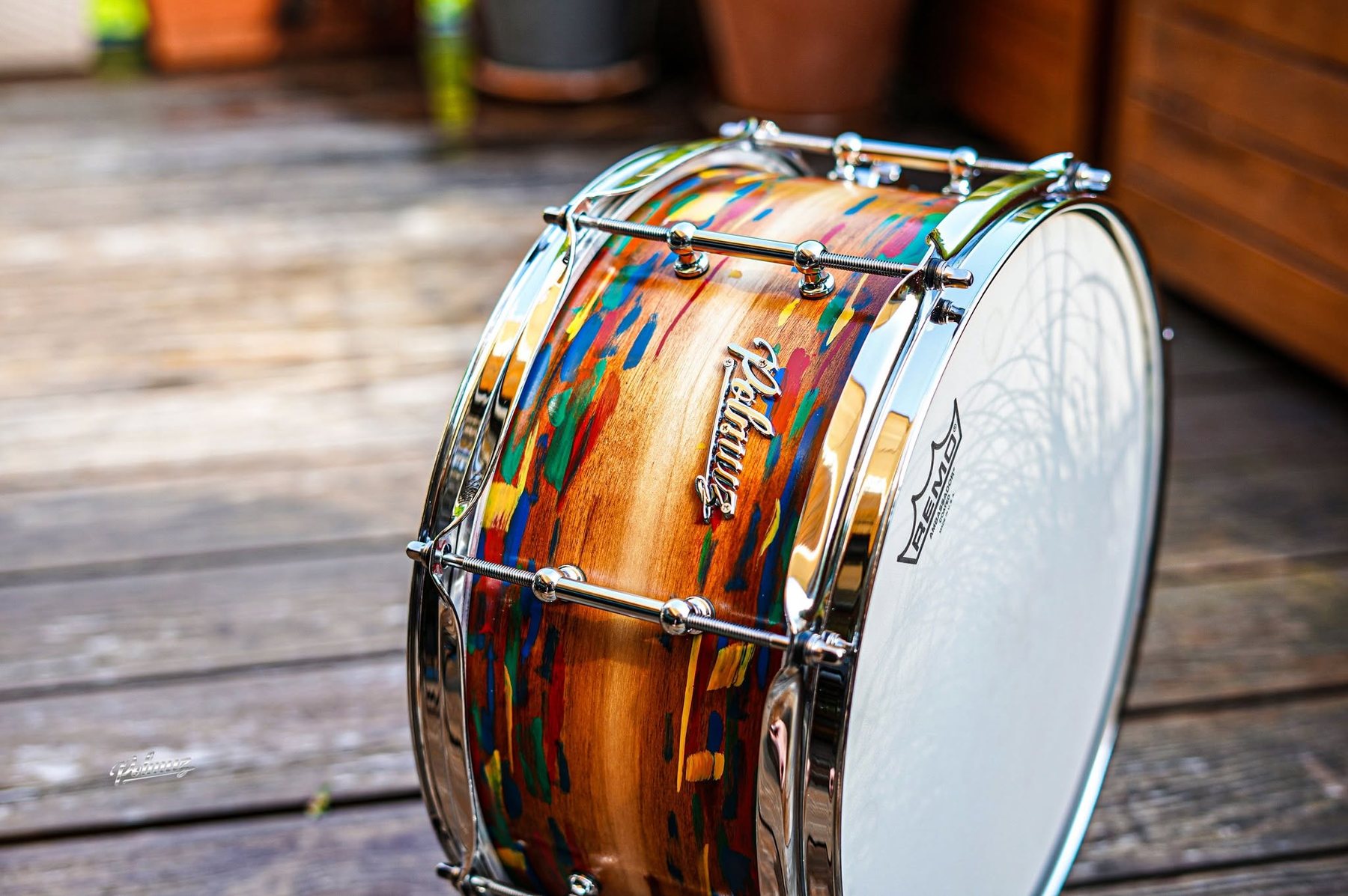
Brushwork
Painted finishes that keep the movement of the brush, the way a painting does. Every kit is painted by hand, with no stencil, so no two come out alike.
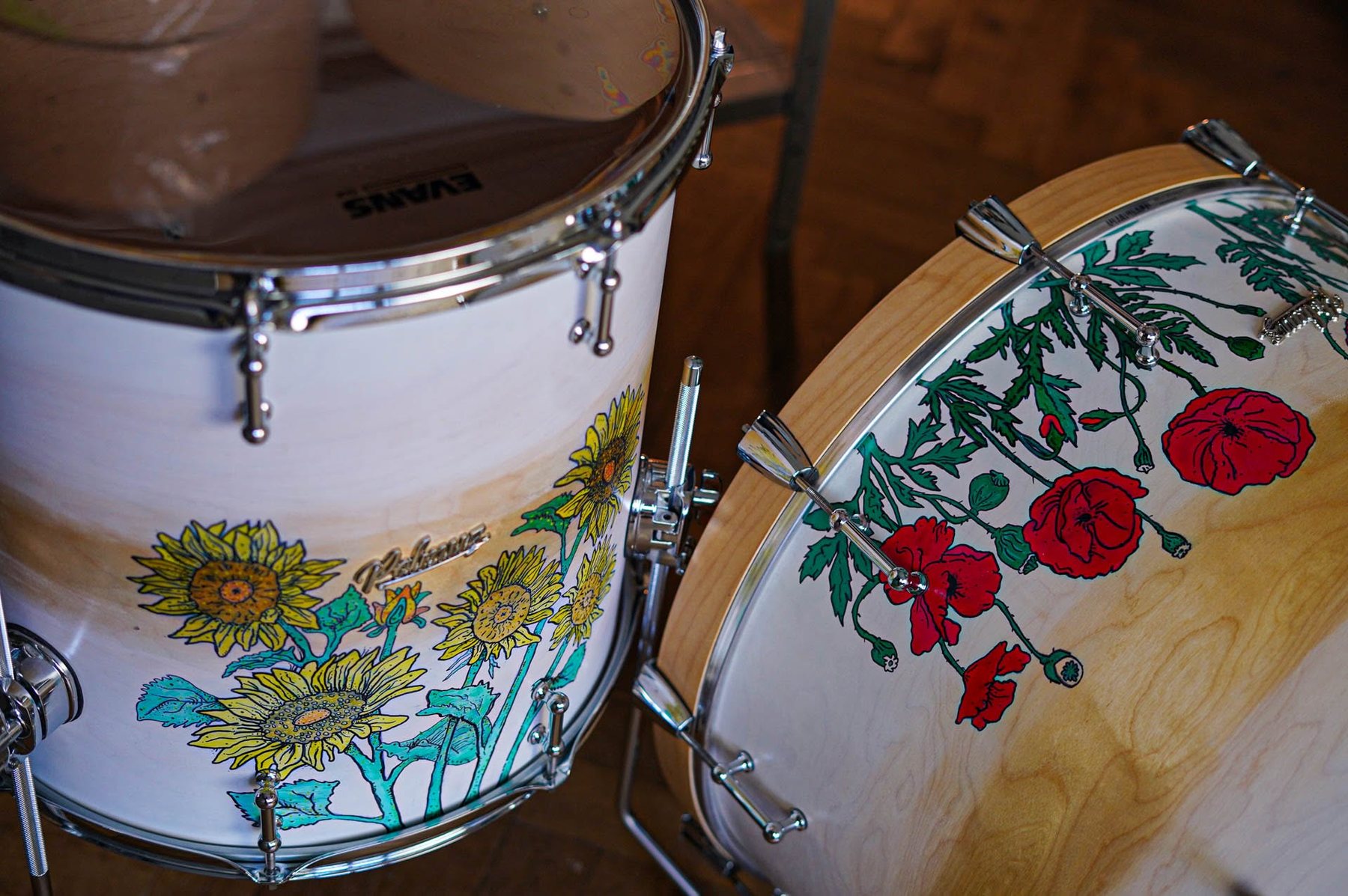
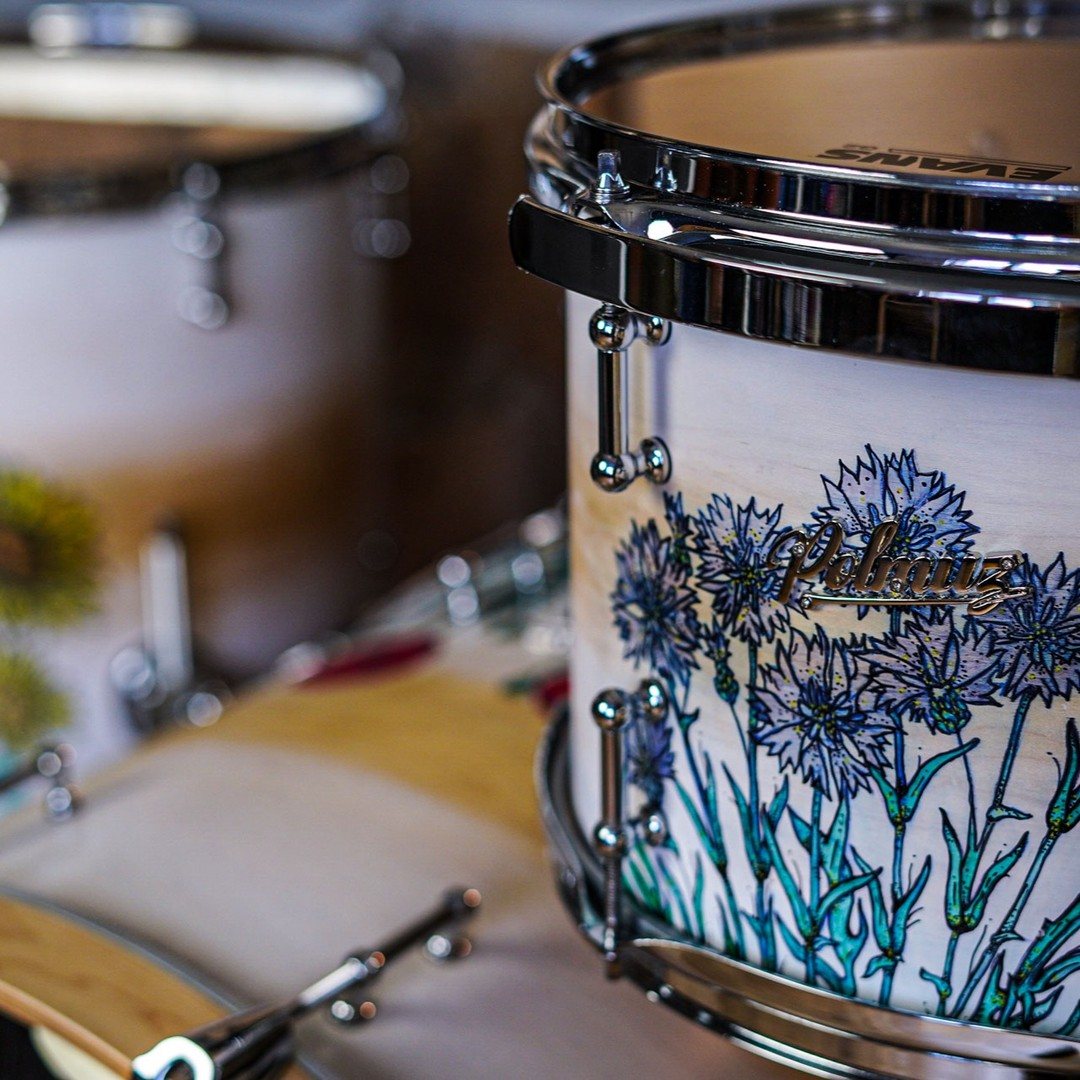
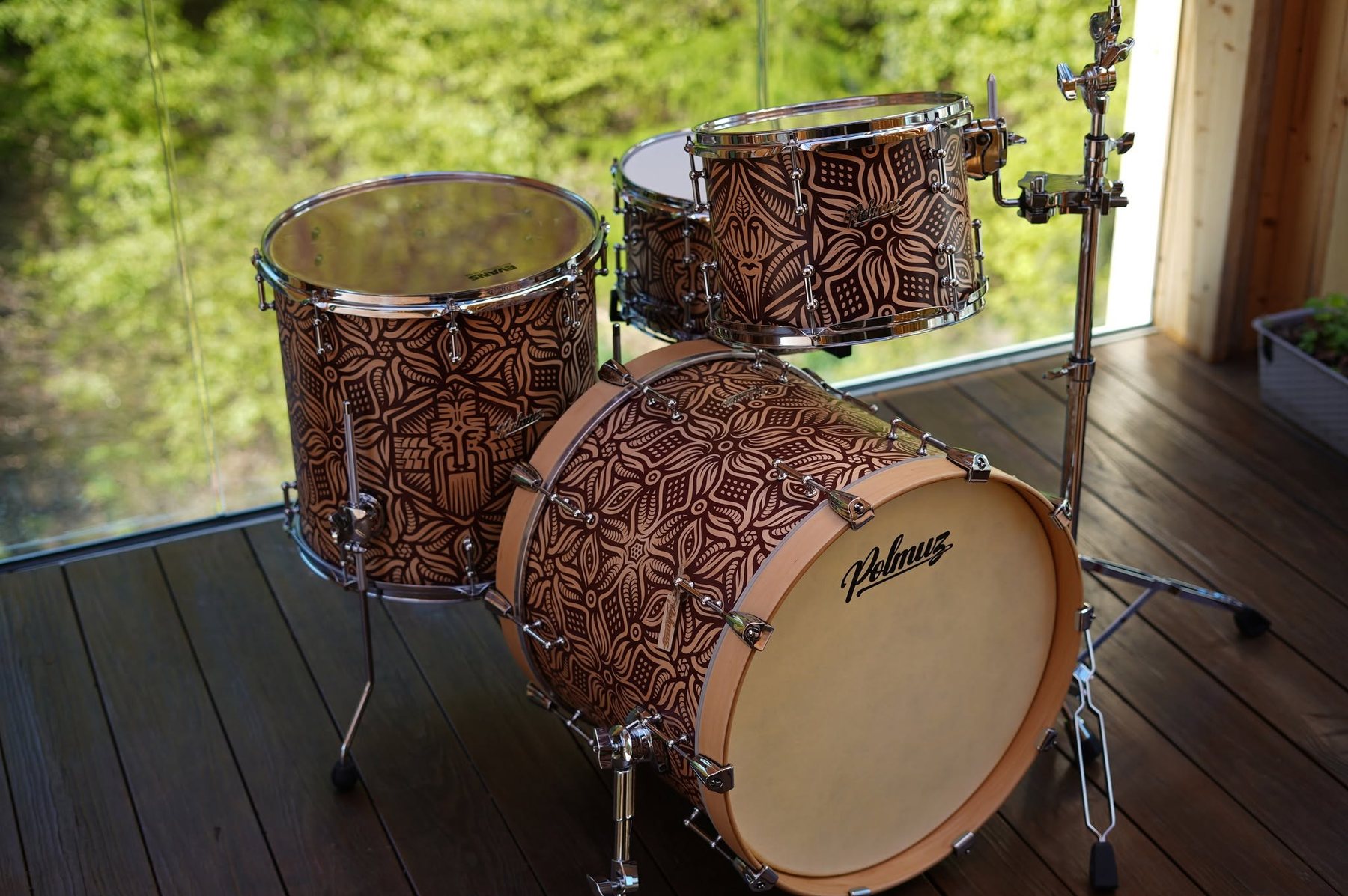
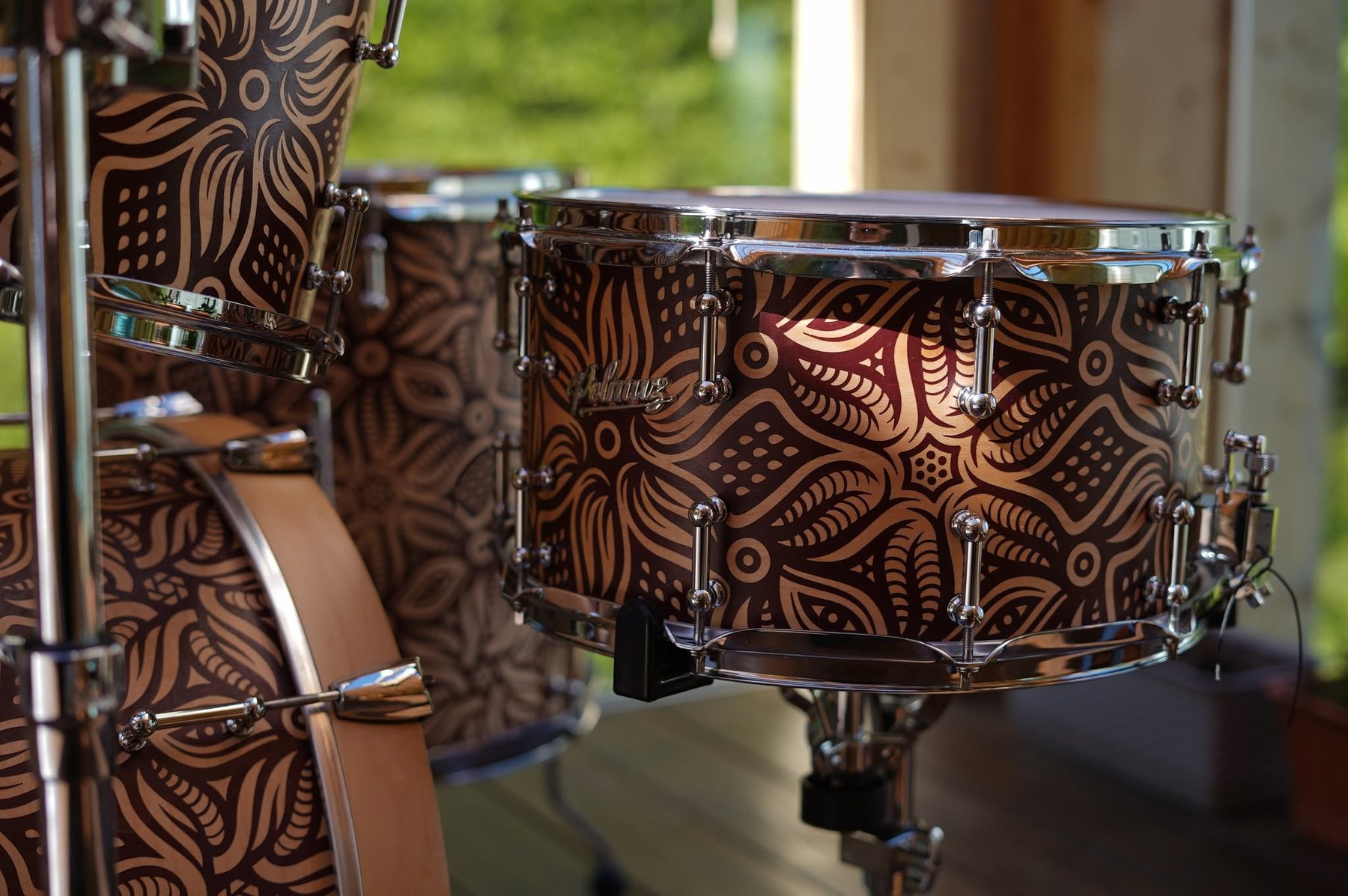
Painting and ornament
Folk flower motifs — poppies, cornflowers, sunflowers — painted by hand on a white wax fade running out into wood. The ornament is designed like a textile and carried across the whole kit.
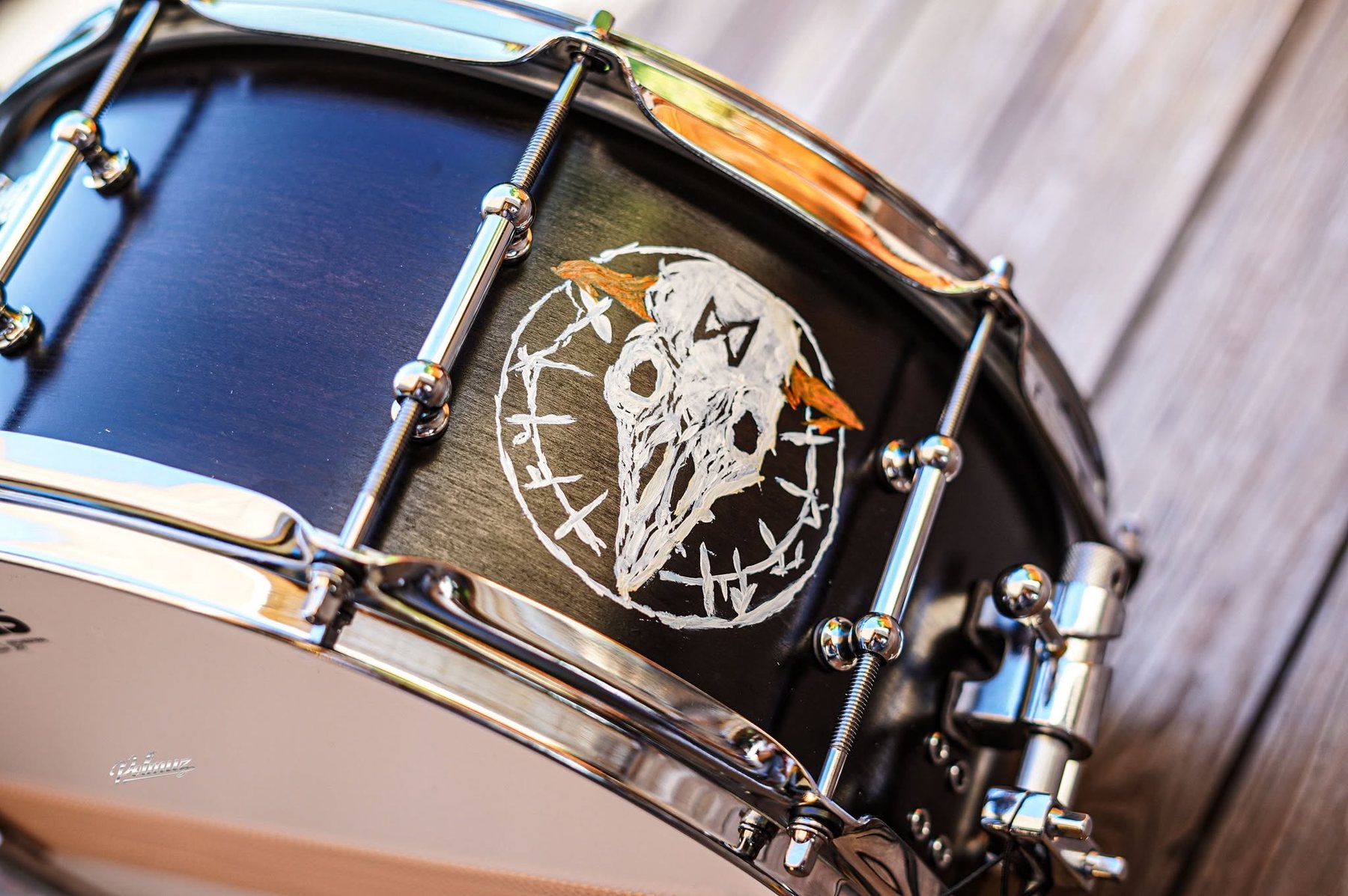
Airbrush
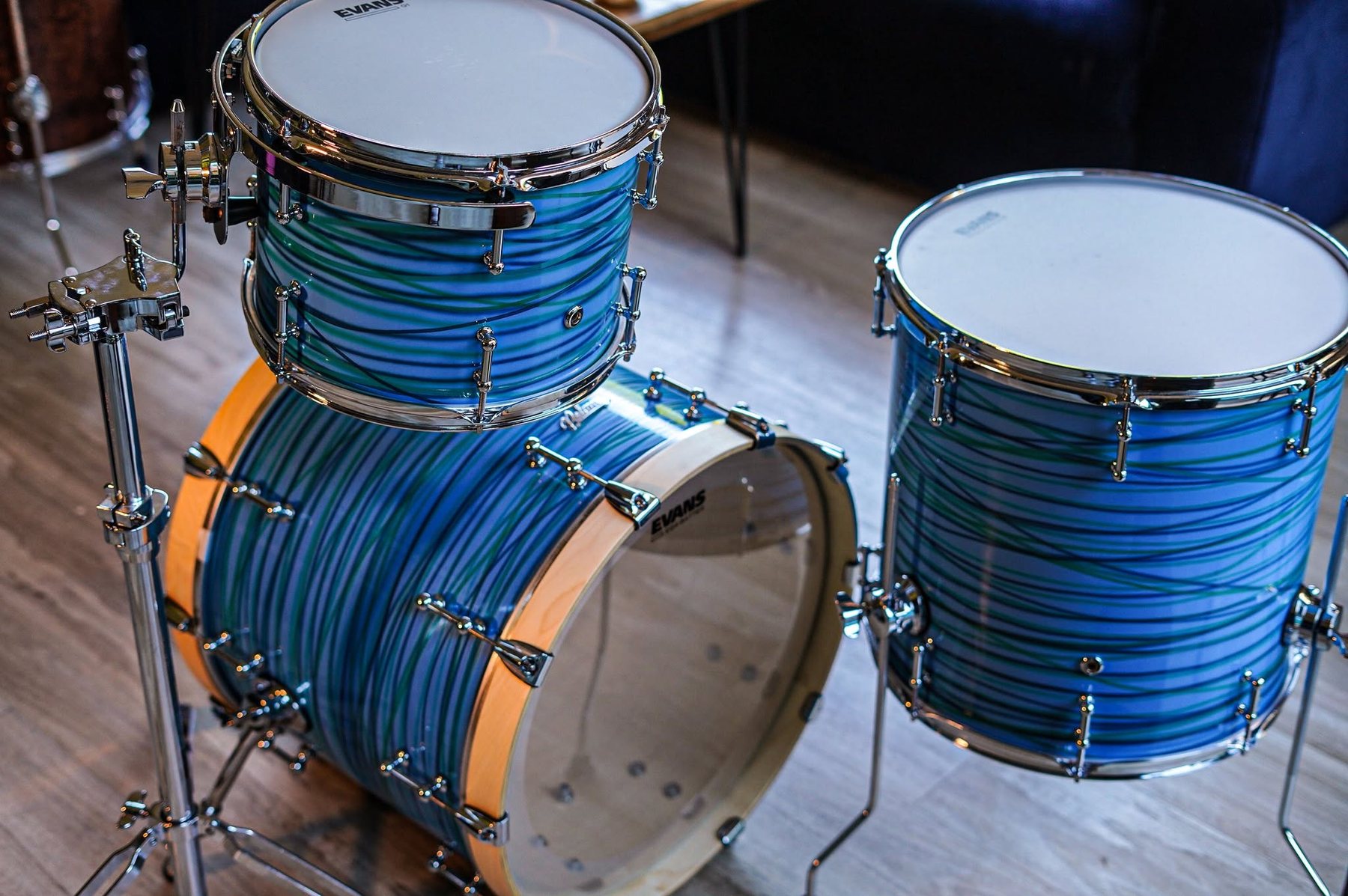
Airbrush work using stencils drawn in CAD. The look of “oyster” wrap rebuilt in lacquer, layer after layer.
Lacquer
Saturated colours, colour-to-colour fades and shaded lacquer on bubinga that brings out the grain.
The National Philharmonic and the Polish Army
Commissions for institutions — one kit for a philharmonic stage, two for an army unit.
A master instrument
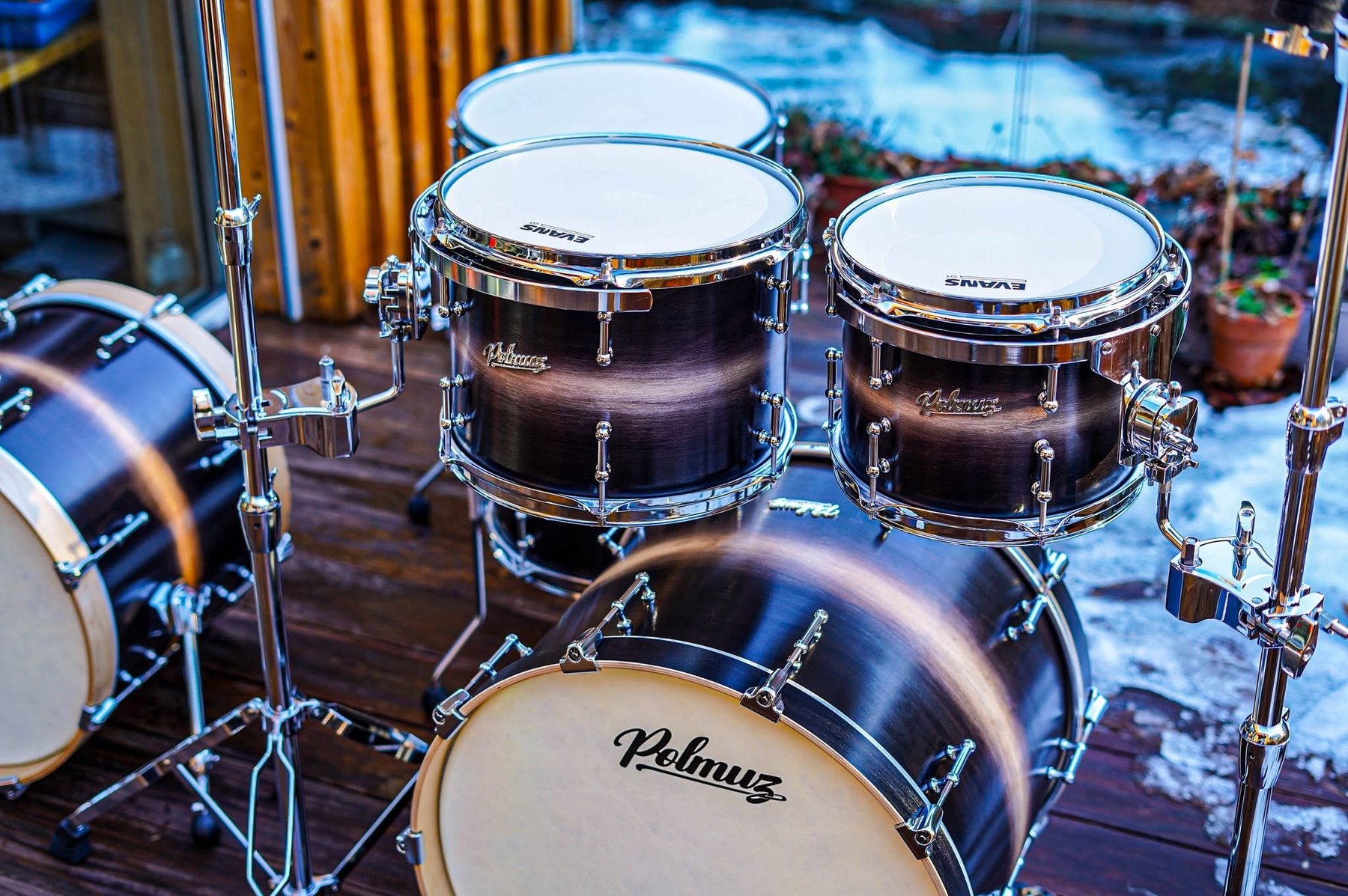
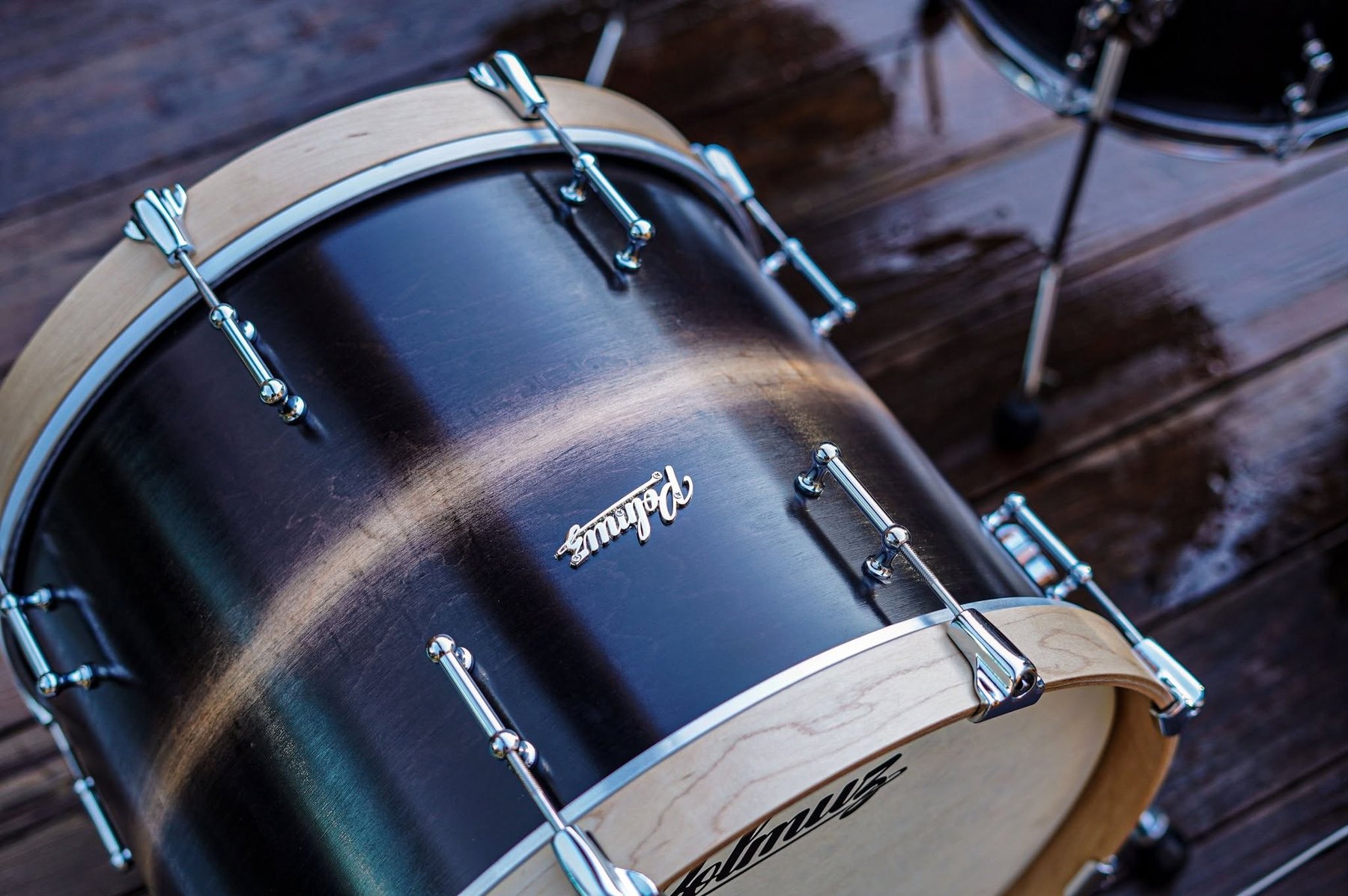
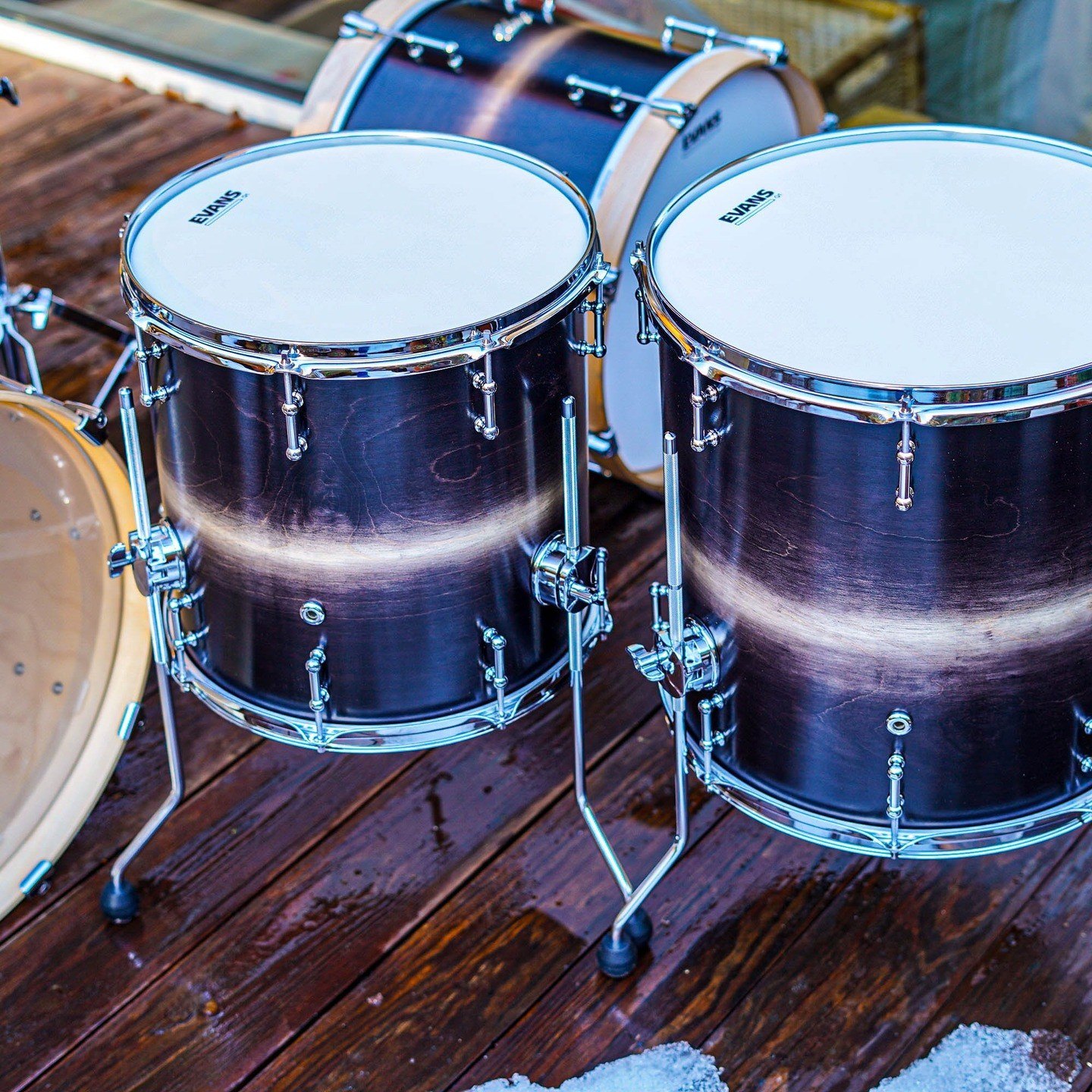
A six-piece kit built to special order. The fade is laid by hand in oil and wax only, with no spray and no lacquer, on 4.8 mm European maple. We developed the wax polishing for this commission — it brings out the grain.
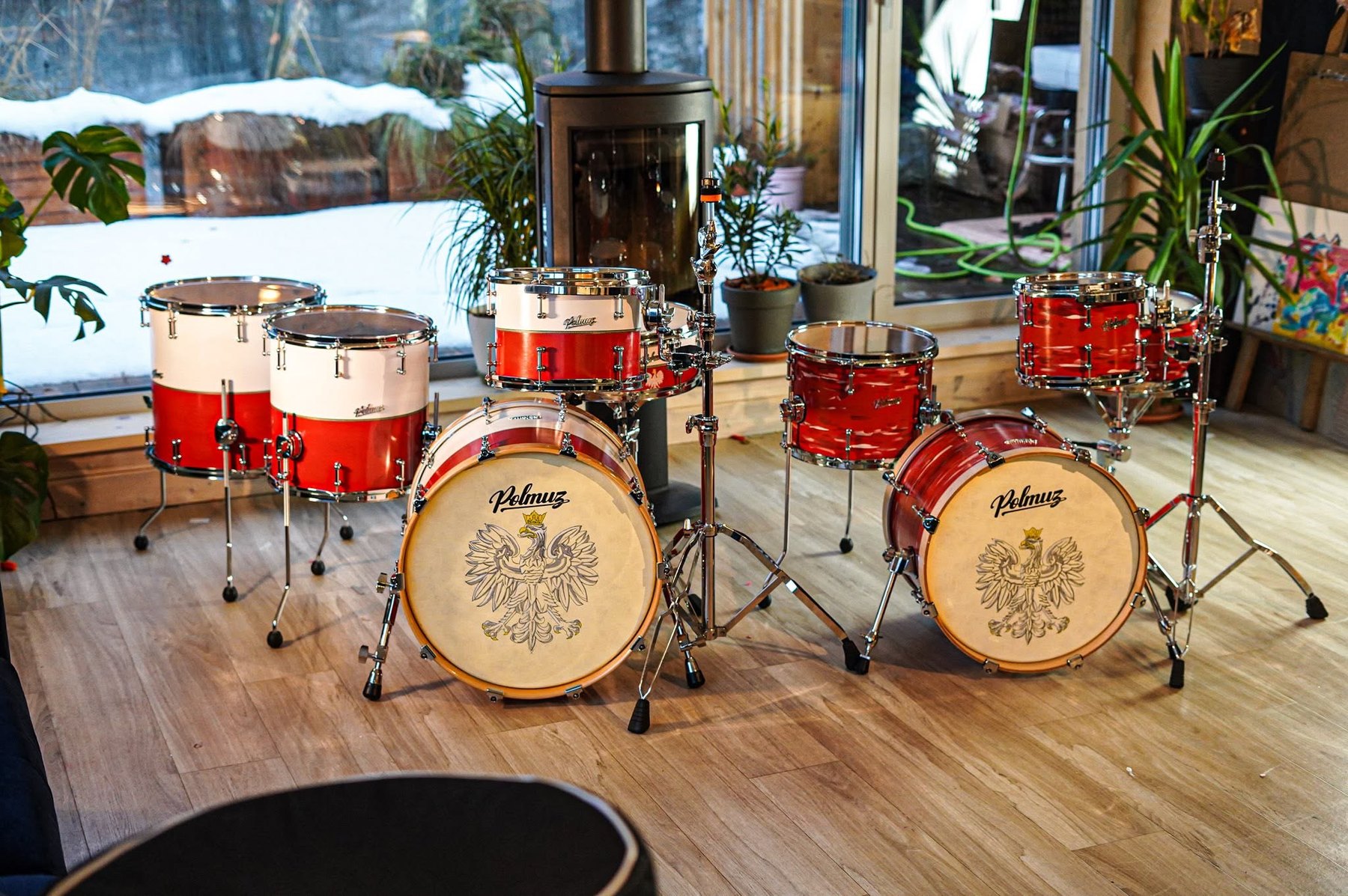
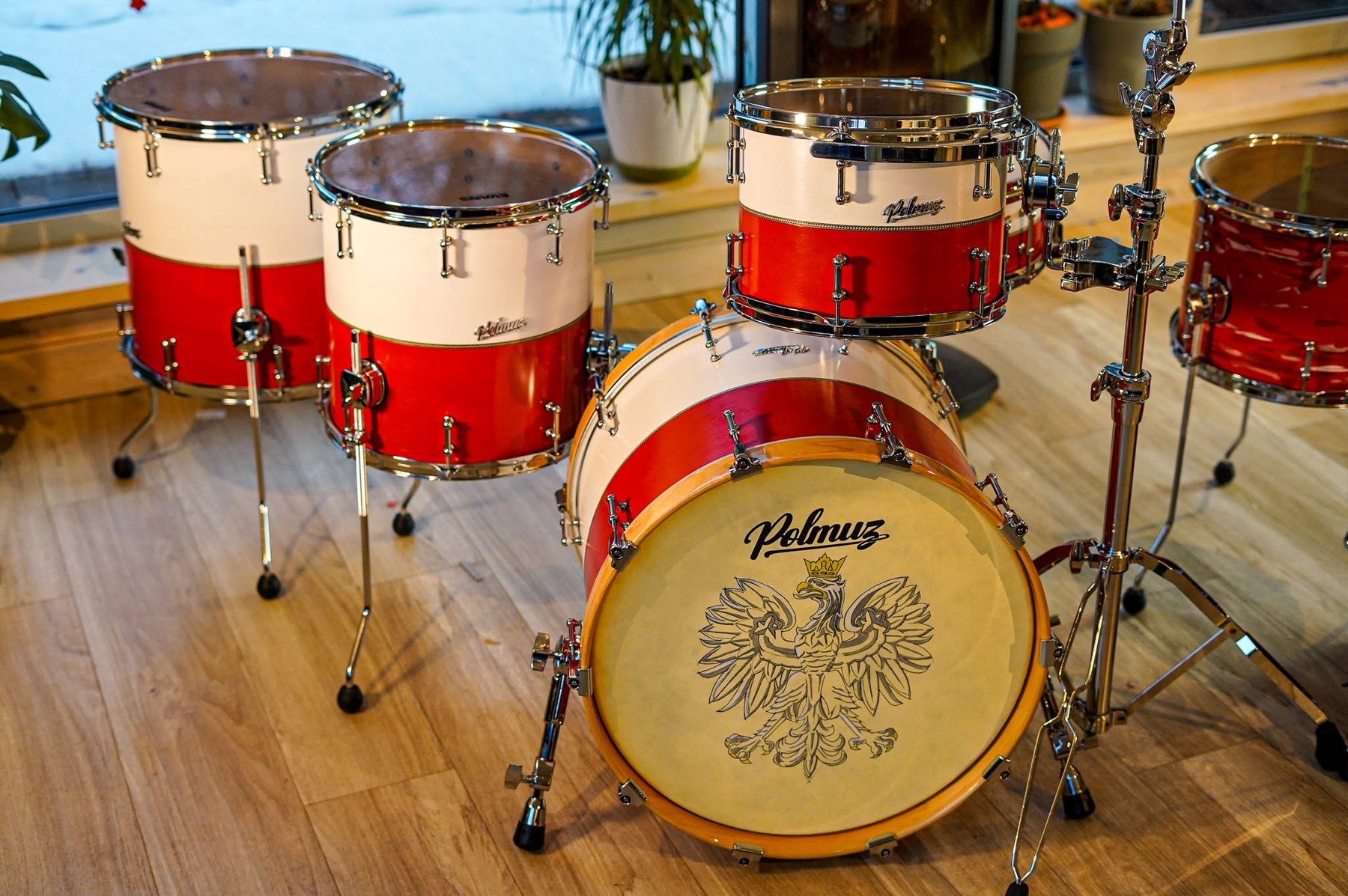
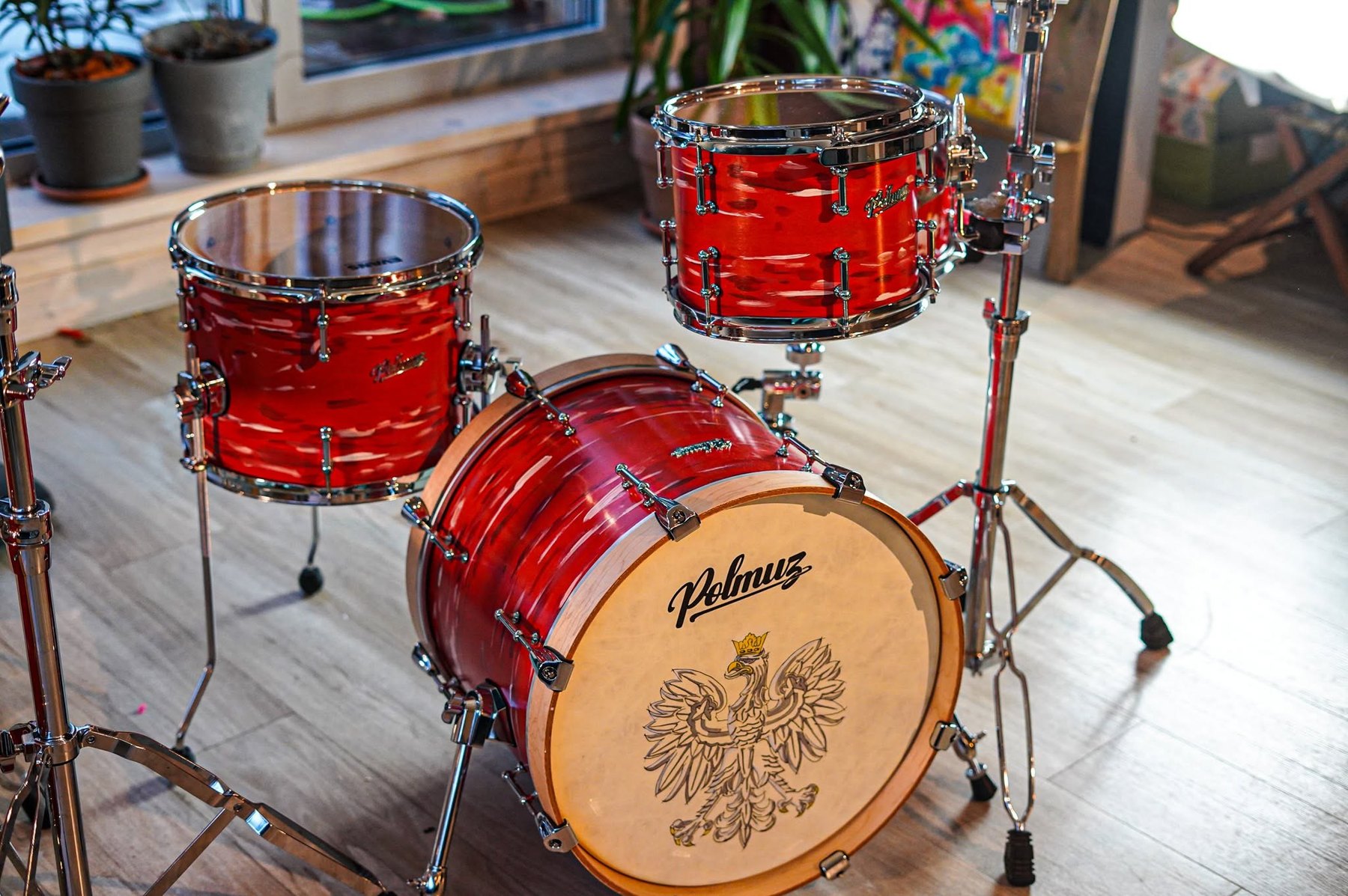
Kits in national colours
Two kits built to order: a white-and-red one with inlay cut into the shell, and a red one with artistic painting. The national emblem is painted by hand on the heads.
What you choose when you place an order
We want people to know straight away that the kit on that stage is yours.
- Dimensions
- Depth and diameter of every drum, one by one.
- Shell material
- Maple, bubinga, walnut. Or metal — copper and aluminium, raw or aged.
- Finish
- Wax and oil, lacquer or wrap.
- Hardware and its colour
- The type of lugs and hoops, chrome, gold or black.
- Inlay
- We cut a groove in the shell and glue in a one-millimetre strip. It is not a sticker — getting it even on a round shell is very hard.
- Graphics
- Your design or ours. On the shell, on the resonant head, your band’s logo.
- Artwork
- Hand painting, ornament, shading — one of the five cycles, or something entirely new.
- Name label
- Inside the shell, with the owner’s name on it.
Custom does not have to cost as much as a car
Typical price of a custom kit
PLN 40,000–80,000
That is what a custom order costs at the makers everybody knows.
A custom Polmuz kit
from PLN 5,500
The most expensive, most elaborate Polmuz we have ever built came to PLN 40,000.
If the plywood delaminates, something cracks, the drum stops sounding — we repair it free of charge.
We say that calmly, because we know what we build: in all these years nobody has had to use that warranty yet. But it is good to have it.
Lifetime warranty on the shell for the first owner. It covers plywood and metal — brass, aluminium, copper — in models 1–4. Hardware and stands 36 months. Acrylic shells 24 months.
We build to order and we stay with that drum
How long it takes
Normally one to four months. With elaborate painting it can run to eight — hand painting and waxing cannot be rushed.
Along the way we send photos from each stage of the build, so you can watch your instrument take shape instead of waiting blind.
What happens next
You talk directly to the person who built the drum. After the purchase we advise on choosing heads, adjusting hardware and tuning.
We also do full servicing — from hardware replacement to restoring shells and bearing edges. Any drum that left our workshop can come back to be refreshed and brought into full shape again.
Hundreds of drummers, from concert halls to clubs
From concert halls to clubs — on stage, in the studio and in the philharmonic.
On stage
Hundreds of Polish drummers play Polmuz instruments, from philharmonic halls to clubs. Thirty-four of them work with the workshop regularly.
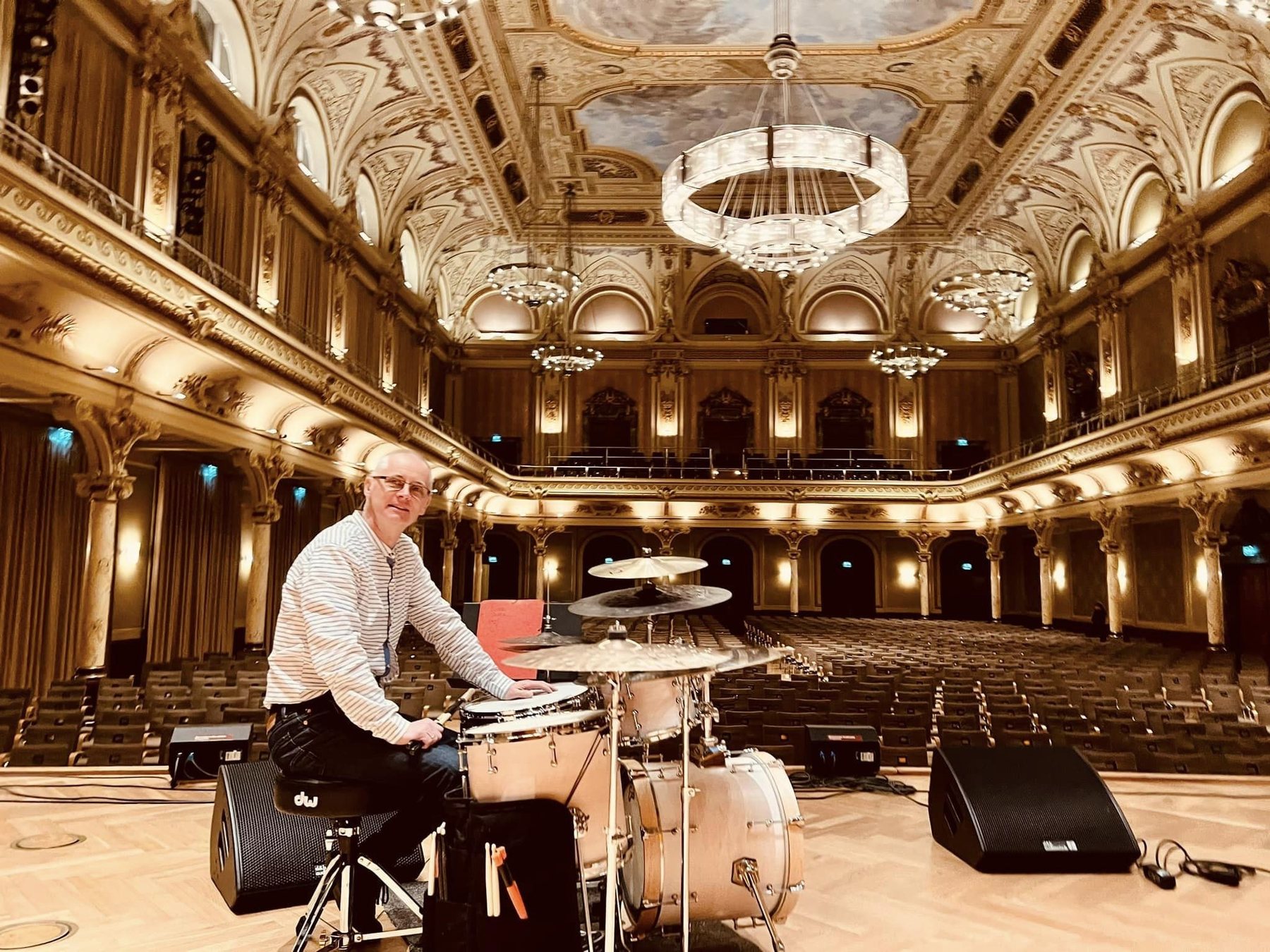
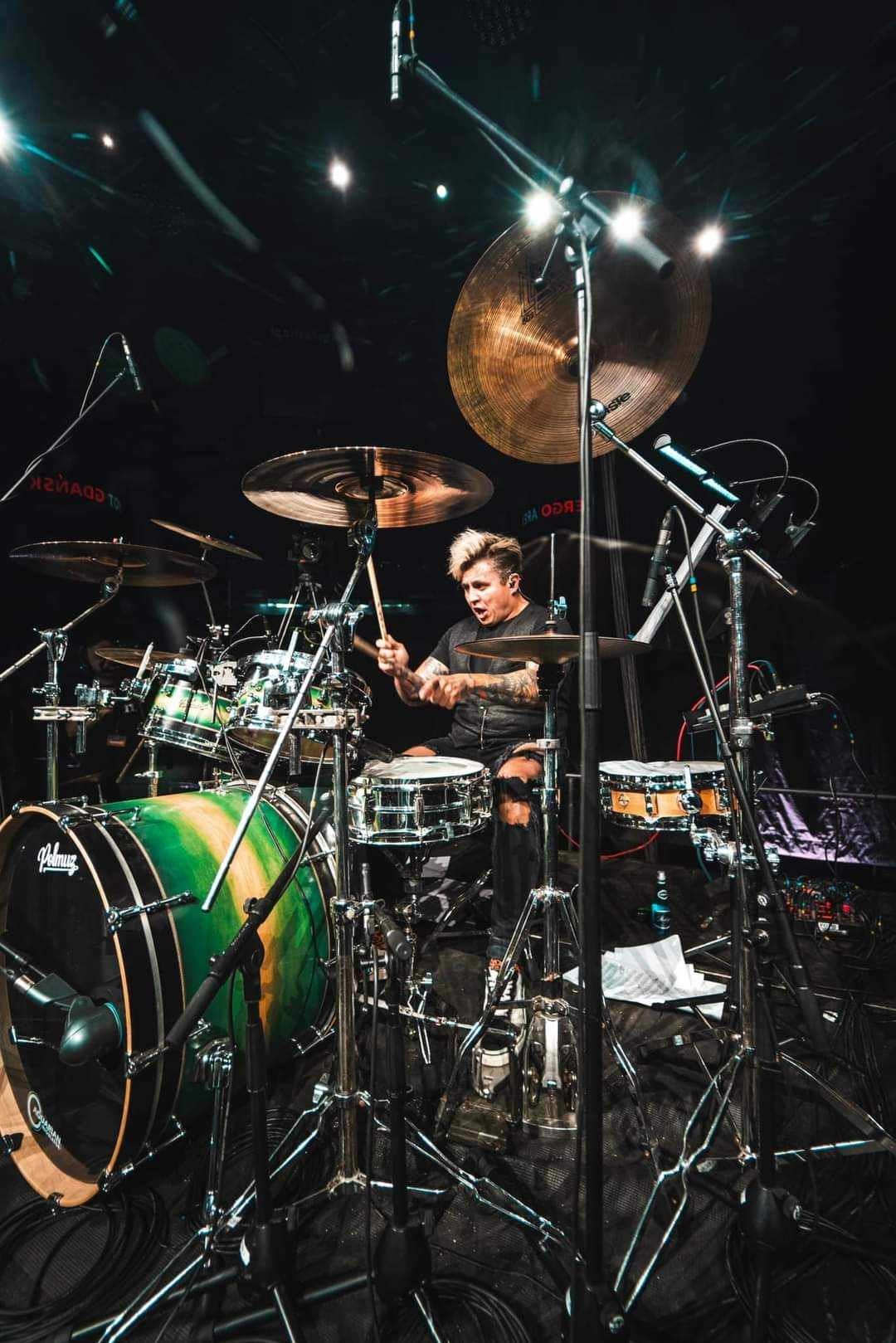





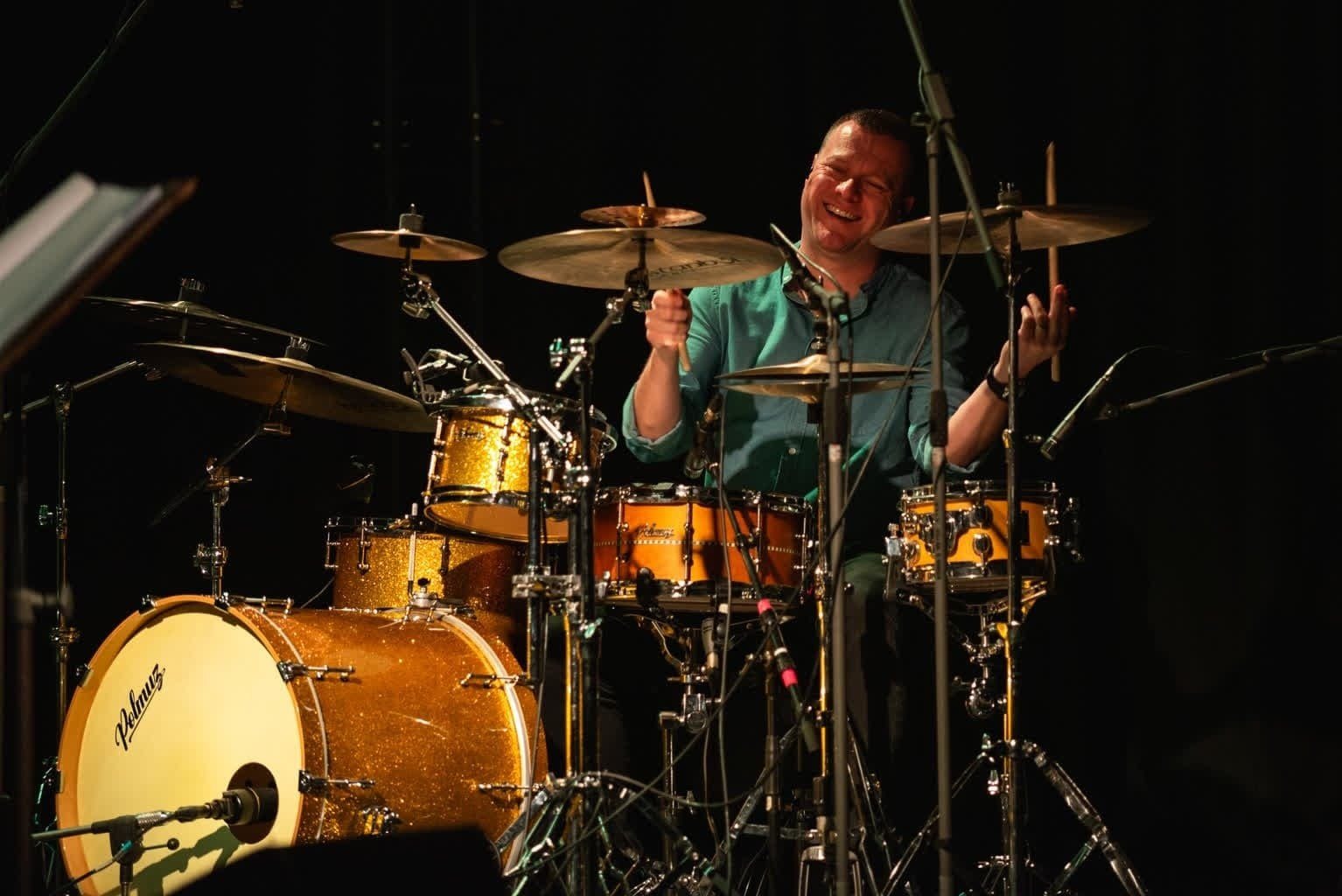
Regular collaborators of the workshop — with their bands and the instruments they play.
 Konrad CiesielskiBlindead
 Cyril Fedorov
 Paweł HerbaschIllusion
 Łukasz „Luk” JeleniewskiLipali
 Paweł KaczyńskiNieznany Wykonawca
 Krzysztof KlingbeinBelphegor
 Pavel MamonauJ:Mors
 Tomasz „Żaba” Mądzielewski
 Mariusz „Nosek” NoskowiakBlenders
 Paweł Osicki
 Paweł Ostrowskiedukator
 Marcin „Manio” PapiorPiersi
 Radek PilarzBednarek
 Klaudia RucińskaSinfonia Baltica
 Radosław Sternicki
 Michał SzczeblewskiAjagore
 Piotr SzpalikPolish Metal Alliance
 Gniewomir TomczykProjekty autorskie
 Paweł TwardochWodecki
 Wojtek WarmijakImmortal Onion, Hania Rani
 Jakub „Zyjon” ŚliwińskiOverflow
Come over and turn the key yourself
When you buy drums, look inside them, not just at the wrap. Better still, drop by the workshop in Gdynia.